Intro from the Editor
Welcome to the third edition of Urban Scrawl.
“When is a building not a building? When is a town not a town?” the words and images in this edition seem to ask.
When it’s a mountain, a gravestone, a ship, a sandcastle, a collection of pixels…
“And what do we see these entities through?”
A camera, a memory, a game, an accent, a screen…
Thank you to all the artists whose questions mark this page.
Their bios are at the end. Like question marks?
Going forwards, the zine will be published ad hoc. Like a city break.
Happy strolling,
Annie Acre x

Southport, 17 July
by Lydia Unsworth
On the live webcam of Funland at the start of Southport Pier at 22:24 on a Thursday evening I count 131 Union Jacks. I count 9 cars, 1 van, and 1 police van driving past. There’s a bit of remaining light behind the clouds in the direction of the sea. Someone has left a placard, outside their building. I count 10 cars, 11 cars, the police van reappears, does a U-ie and retreats behind Funland in the direction of the bridge. The camera is run by CamSecure, it looks like it’s attached to the ticket booth of the carousel – the historic Golden Gallopers. I used to watch webcams a lot; some of them could be turned slightly using the keyboard arrows. We used to make a note of where they were and have one of us sit in an internet café taking screenshots while the other ones ran around the city trying to be caught on screen. Some cams would produce a still image every 6–8 minutes and we’d just be stood there waiting, waving at a gargoyle in the street. Silcocks have been in the amusement business for more than 6 generations, or 130 years. Two flood lights shine on the front façade from either corner of the building. Another car. I’m cold watching the video, disappointed. Police car, blue lights flashing. Free admission. Distant cars. A memory: I’m somewhere in Wales sometime after closing, eating pizza out of a box, using a streetside bin as a makeshift table. A memory: I’m hoping the world can offer me more than this. Red car, blue car. Family fun. The flags shiver. When I scroll away from the video, the black-and-yellow bollard continues to be monitored, all night long. Silcocks purchased the carousel in 1989 and spent a couple of years restoring it. There’s no mention of how long the webcam’s been here, when CamSecure took on the contract, or when the homepage of Silcocks’ website started broadcasting the footage from that webcam for all to see. We used to play ChatRoulette – all those living rooms, all those bodies, their faces and their awkward gesturing. Worlds of strangers, looking at each other. The variations, the immediacy. We didn’t say anything. So sudden, so easy. The way we could minimise it if it didn’t suit us, spin again. I close Funland’s website, re-open it. The reflective sticker wrapped around the bollard is silver, glaring. The ability to easily be in a world and easily leave. To manifest, repeat. It’s like I’m there, in secret, on one of the Gallopers – Trixie, Ruby, Michael, Jean – waiting for someone to notice me. And I’ve said this before, but I watched a show set in a greenhouse where the main character would put three things in a tree, and something – the hook of each episode – would be made from the combination of the things. Metal shutters always remind me of a man with his hand around the neck of a woman. I remember the Tippexed graffito, all lowercase, on a closed shop shutter on our high street: sorry about this. We laughed at that, my daughter and I, the apologetic portcullis. Two pedestrians now – a young mother and her teenage son. Or siblings? Blue tracksuit top, blue jeans, both. She’s texting on her phone while he walks with his hands deep down in his low trouser pockets. Higher up, the clouds have parted. Behind them, it’s not quite night and might not be. The illumination on this building is sad like the end of a party. The mumbled second half of a hundred chastened impulses.

Sonder
by Annie Acre
I stand on this street corner day and night, where New Cathedral St meets Market St, enlightening anyone who’ll listen. Not about religion or products, about sonder!
“Do I know the way? Jesus is thataway, Moloch’s thataway, but here, right here, is where you’ll find sonder...”
I first felt sondrous when I came across a wiseman with a placard on this very spot. I got the concept so deeply, he switched roles with me. One day, a randomer will relieve me, I’m sure of it. Until then, I spread the message.
“Do I have the time? Forget the clock, time is an experience! We’re all, at this moment, experiencing time differently. Look around in sonder...”
It’s a matter of practice. See: for that girl licking birthday cake, the day will stretch like a sky balloon but, for that man with a face like a London bus rushing for a meeting, office hours are like a shuttle.
“Have I heard any rumours? I don’t stand here to gossip! Have you heard about sonder...”
People think street preachers are mad or gullible fools, but imagine not believing in anything, or having a mind like a morsel menu of other peoples’ ideas. So many passersby stop to talk to me because they’re on the cusp of freedom of thought. I give them permission to breakthrough.
“What’s sonder? Hallelujah, I thought you’d never ask! Sonder is the profound awareness that everyone you happen past is experiencing a life as full and complex and real as yours, that you are an extra in others’ lifescapes...”
I love the light that floods strangers’ eyes when they hear it for the first time, when they look around at a sea of protagonists. I can’t help but dance in celebration.
“Do I have anything to buy or sell? How can you think of commerce when there’s epiphany to be had! All I have to trade is sonder...”
It’s a surprisingly common question. Perhaps people assume visionaries must have truth serum or mind-expanding drugs. Or maybe bartering in the street is a sign of these hard times.
“Let’s exchange truth then? Now you’re talking! I’ll swap the concept of sonder...”
This really is my calling. Whichever branch of questions folk take me down, I naturally bring it back to this core realisation. I am living in its state.
“How does it feel to be a Non-Playable Character?”
“Erm what do you mean, I play…or
Oh my God, am I not... or
Here, take my place…”
*
To truly understand an idea, you must fully grasp its opposite. That’s how I got this pitch. I can’t wait for my first conversation!
“What’s the opposite of sonder?...”

Looking for the Perfect Camera Shot on Heptonstall Moor
by Linda Sunderland
Everything’s been tried;
Landscape as woman;
Landscape as threat or promise;
Landscape as history,
The fleeting, the rooted.
Horizon is a bored etcetera of hills (crop).
Those distant walkers too obvious a contrast (refocus)
That ampersand crow lazy shorthand
For desolation, life lived on the edge.
Leave out those frost- scored fields
Like grainy photographic plates,
Low tumbled walls, sheep-stalked.
Ignore the sun’s searchlight
Fingering through clouds,
Clichés, used to the camera’s gaze,
Whores teetering on white stilettos
Lengthening their thighs for the punters.
Carved into this boulder’s face
Geoff Dyer March 1953
Sharon 4 Simon February 14th 2003
Samuel Whitegate in April 1878 sat here.
All must have seen this view
Carried it back to council estate
Factory, bedsit mixed with memory
Of what that day had brought them.
Take a picture of these names,
Lichened and bird- limed
Ghosts of a day in strangers’ lives
That I now share, glimpsing their faces
Reflected in the gold coins
Of a thousand peaty pools,
Hearing their voices in the mute
Semaphore of waving cotton grass.
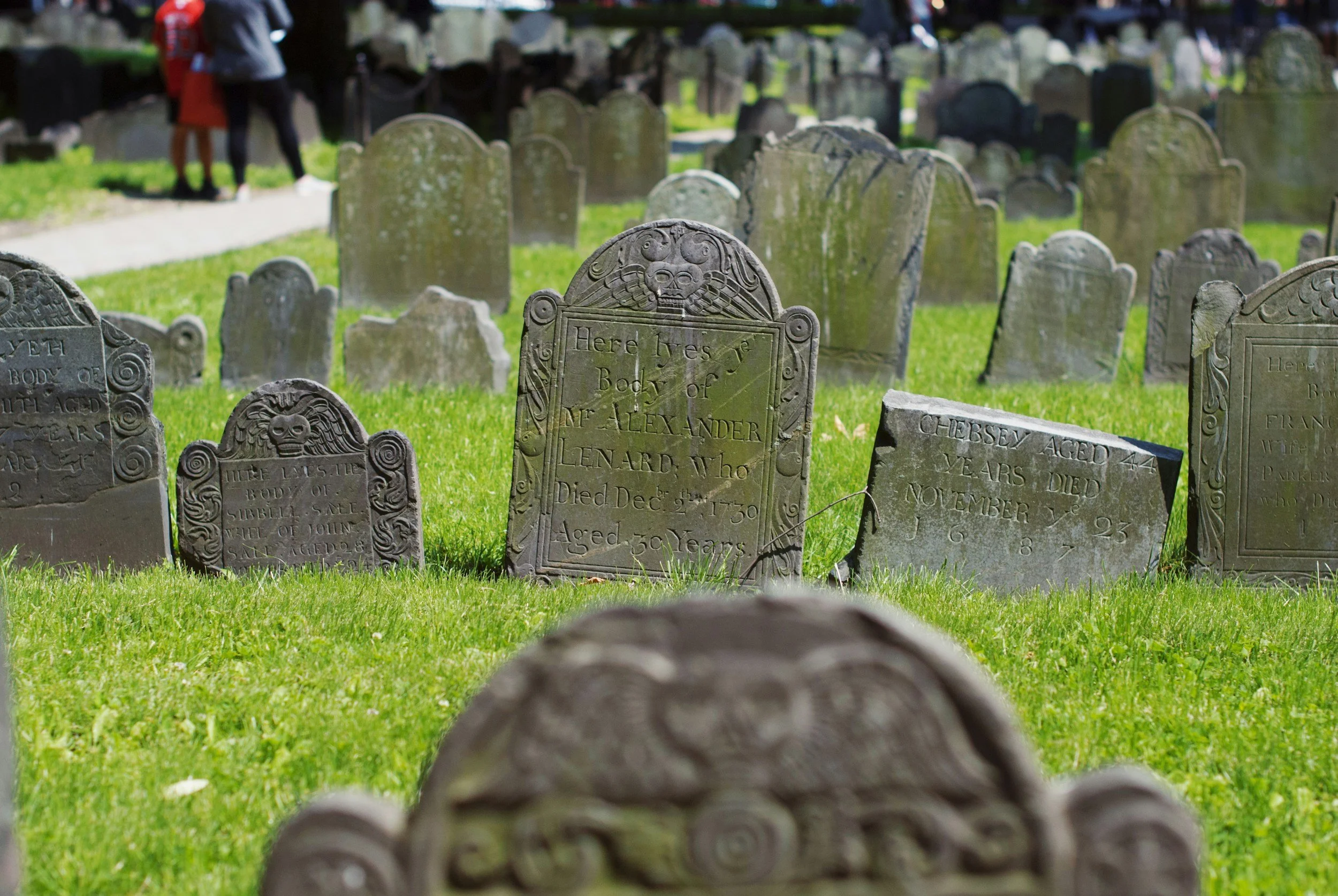
Heptonstall Pensioner 1963
by Linda Sunderland
As soon as I saw ‘er I thought,
Tha’s done it nah, lad.
She were a gonner as soon as she set foot.
What were in yer head bringing ‘er ‘ere?
Blatant as a naked arse, this place,
home to mad folks like that Bronte lass
traipsing up Penistone gawping at visions,
and barmy preachers seeing Jesus
in t’ bottom of a pint glass.
An’ I could see she were one who’d soak it up,
visions’n all,
hoping she’d soak you up, too,
along with t’ weather .
Tha should have kept her away from it all,
away from t’ farmers pissed off wi’ sheep fluke
and cows wi’ t’ scours,
yer family, t’ moors.
It were too much for t’ lass.
Tha needs to be born into it
to bear it, even then it’s too much fer some.
Well, she’s ‘ere to stay nah,
Up in yon graveyard with some of yer lines fer comfort,
Even amidst fierce flames
The golden lotus can be planted?
She’ll not find many lotus ‘ere, lad:
Bog cotton and peat
and bloody wind fiercer than any flame.
Look after t’ childer now, fer t’ lass’s sake.
This poetry lark’s a bugger, no mistake.
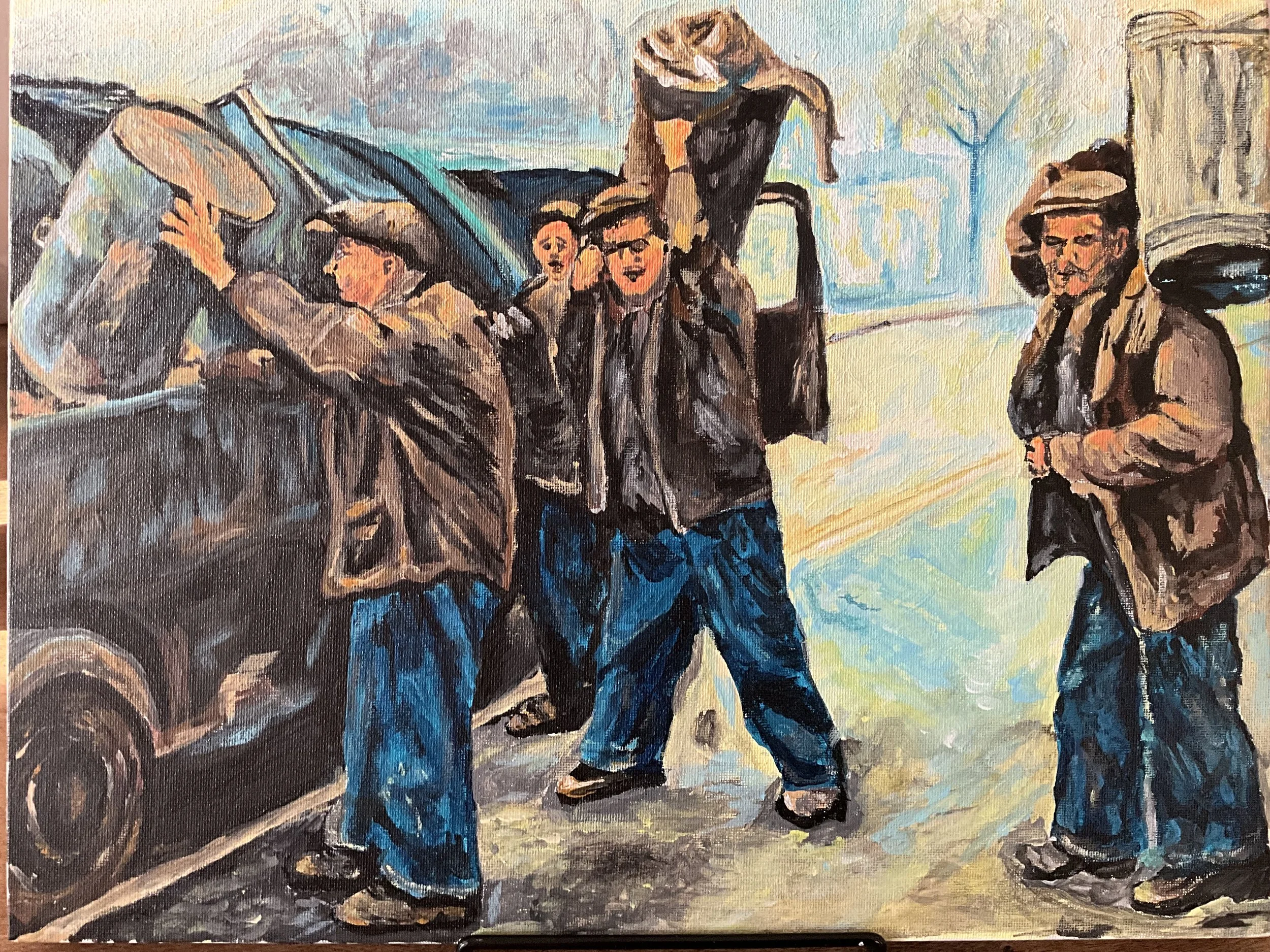
Bin Men
by Paul Marshall
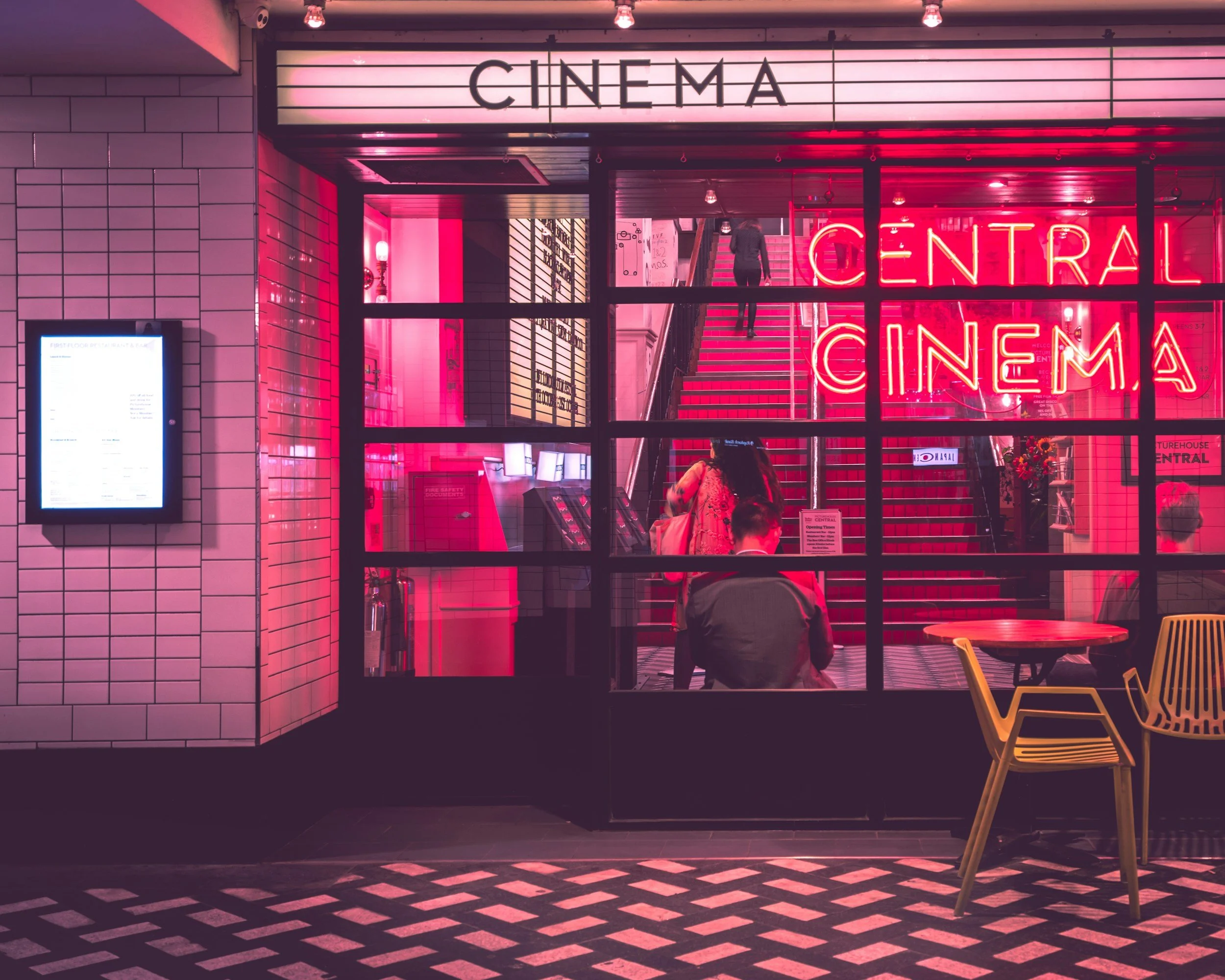
From the Adecco and the Curzon to Whatever Comes Next
by Andy N
My nephew was telling me on the telephone last night about a new cinema that’s due to open in Stretford in March, and it left me a little stunned, considering the last cinema in Stretford was the legendary Adecco / Longford Theatre, which showed its last film all the way back in 1965, way before I was born.
This doesn’t mean, of course, there weren’t any cinemas growing up; my local cinema (unless my parents took us to the centre of Manchester) was the Curzon, which was on the borderlines of both Flixton and Urmston.
History books show this was a building built in 1936, just before the outbreak of the Second World War, as an Art Deco building, certainly on the level of the Adecco in Stretford, and was finally taken over by the G.B. Snape Group of Assic around 1963 or so.
Looking back at pictures of when I first started going with my family in the mid 1970’s (My first film, I believe, was ‘Star Wars’ in 1976, which we left early when my sister was ill, which still brings a chuckle out of my father even now) and it was a beautiful, be it old fashioned building even then, which carried on until 2008 but like so many local cinemas, with the onrush of the multiplexes springing up everywhere – the Odean, Vue and Cineworld to name but three with their vast screens and car parks big enough for a small crowd was forced it to eventually close.
Fast forward a lifetime, and the thought of a new local cinema in Stretford getting a cinema again – even a small, modern one – really does feel like the return of something communal.
It can never be a perfect re-creation of the old days (nothing could quite be the Curzon or the Adecco), but perhaps a gentle revival of the shared experience in a local environment is an interesting reaction to the massive cinemas which continue to dominate our city.
In a world that’s become louder and faster, maybe a little cinema in Stretford is a reminder that not everything has to be vast and massive.
Sometimes all you need is a screen, a seat, and a place to wander out into the night without feeling swallowed whole.
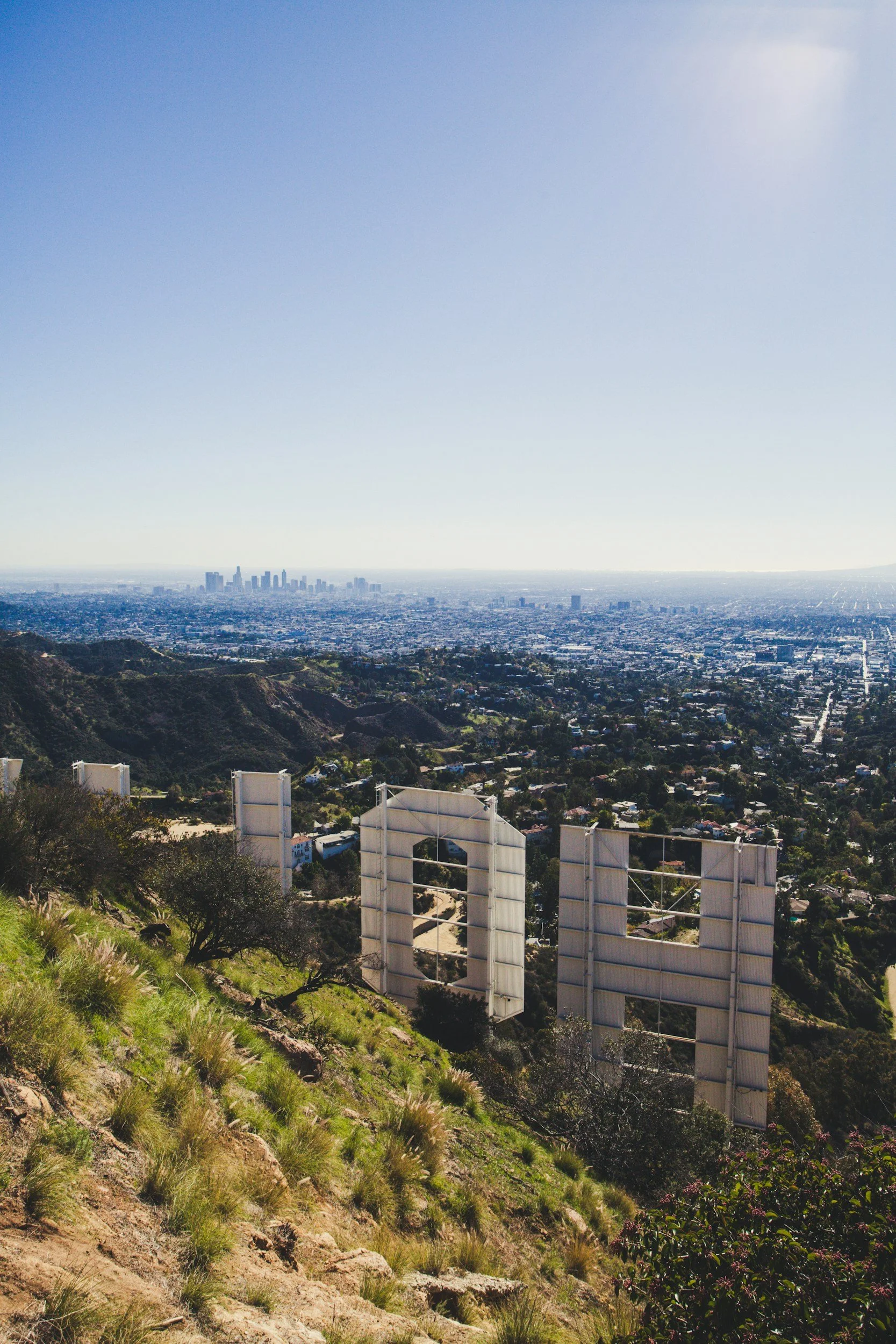
Land to Ash, Ash to Ocean
by Scott Ferguson
The world is gone, but Los Angeles is TO BE CONTINUED ...
Well, maybe LA is partly gone, or gone is partly LA. Los engaños like "LA strong," or "we take care of our own" require strong backs to haul them truthward, but mayors are spineless, and so are councils and chiefs and governors in the clouds, and team owners and trainmakers and recyclers (studios, I should say), and branch offices and ballplayers and bastards. Each so-called immigrant is stronger than ten of them. But none of that changes the fact that Los Angeles means you can do anything, if you look the right way. Even with your eyes closed. Meander into streets with the gorgeous at your flanks. Wave as roads narrow, or don't. Yield, or don't. Make art, or stew in your own filth, or do both at once.
Yes, Los Angeles can be tough. It sports a tight leather jacket (vegan, to be sure) lined with lenticular cloth and adorned with spikes, and it hunches its shoulders, high and tense. The stance of a rival. Then, after months of assignations, the clenching becomes clutching. You are in it now. Vaya con Dios.
Notwithstanding its sun-tea and sprawl, Los Angeles ain't much against Father Fire, or Daddy Drought. It radiates spite and hypocrisy and frustration and failure and smoke and dust and invasive plants, and grass grown into kindling palms that scrub the air no better than a quail's wings.
LA is a desert at the ocean. But the network of dry strands fueled by favors? That's on the outs. In, for now: waves. Some are crashing and impossibly strong. Others cannot be seen or heard just absorbed or deflected, yet they are the the most wondrous invisibilities humans can craft, carrying four million dashed hopes on their peaks.
Geologists speak of faults and fractures, cracks and caliche. But their scales cannot detect everything, and I am sure, so completely sure, that it is the roots that shake the grounds of LA. Twisted and thick striations with untold lateralities that cut and crawl in and through earth too deep for any machine, just to wring the rock for a drop. Trees know everything, and they scream their wisdom, but Angelenos aren't famous for listening.
So, having addressed all the elements of the gods, I leave you with this about my adopted city: Los Angeles will join the departed someday, likely sooner than most. When it slips into the cool Pacific, steam to power a thousand ships will rise. The ships will carry us to a far off island, where we survivors can watch the sun rise and set a few more times. And none of us, not a single sorry soul, will ever forget what we did in Los Angeles.

Ghost
by Kev the Poet
The North Atlantic rocked me asleep.
That and a cocktail for Southern
gentlemen, who never saw Europe.
I blame both for the vivid dreams
(maybe seasickness medication).
The ship is empty for today
and you can hear it breathing through
the funnel, catching it’s breath like
a swimmer, before the next tide.
The tour buses are parked down below
and the German for cruise (kreuzfahrt)
amuses me, childish but funny.
And I’m pretty sure that wasn’t
a black cat under my dressing table
but I think that might have been my
Mum, as I sat in the hot tub,
one Teutonic Spring morning
Her red body warmer catching
the light, some ghost of the quiet places.
Deansgate
by Joe Tetley
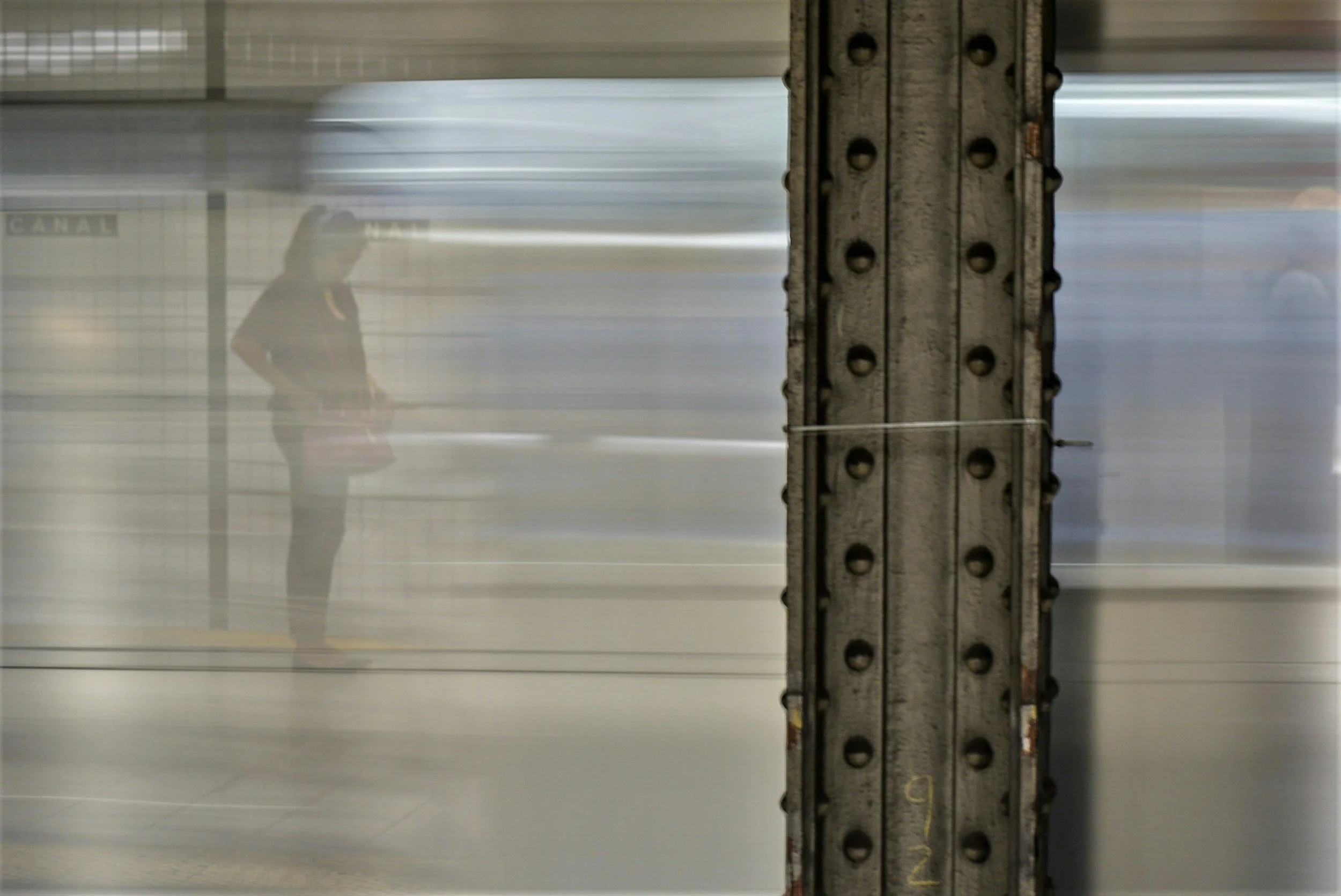
Stood on the platform,
Just before dawn,
Wrapped in the bubble
Of my winter coat,
And noise cancelling headphones,
Watching the trains.
Am I in some zen nirvana?
I count the 22 containers
On the freight train rolling by,
Wondering at their provenance,
The contents they hold,
Electronics? weapons?
Car parts? beer?
Are the empty trucks
Already delivered?
Or yet to get loaded?
But really I'm watching the sky,
The train’s a distraction.
The soft greys of night,
Give way to flecks of blue,
A background for the cobbled clouds.
Lighting in the high rises,
Flickers on and off,
As people visit the bathroom,
Pour milk onto their cornflakes.
Are you up there doing that?
Oblivious to the man,
Quietly passing through,
Stood on the platform.

Scaling
by Tom Kyle
Walking by the window as I scale the building’s mountainside, I collide my eyes with a passerby plummeting to the pavement. In days gone by, nets fished the sky to catch careening souls like him and save the city’s sunset blush. I push towards the summit, exchanging waves with bedded campers clamped to sagging sofas huddled for warmth around television sets. Leaning from her windowsill, a smoking woman smiles wincingly through bruised cheek mascara streaks. “Nice day for it”, she absently remarks. I agree with a nod as on I plod up edifice of concrete Everest. Light grows dimmer, air gets thinner, simmering heat rises feebly from streets, too far below, out of reach. Close behind me the shrill screech of a red kite on the run, shaken from dihedral scavenging by mobbing crows defending nests. Smoke from weed and burnt toast offering billows from a window on the topmost floor. Pushing through pain from punished thighs, I lumber over the rooftop ledge, to sit cross-legged above it all, so tears remain unseen.

The Small Journeys That Shape Us
by Andy N
People in Stretford always shop in Urmston, and people in Urmston always shop in Stretford…. It’s one of those quiet truths I grew up with, a piece of local logic that never needed explaining.
The bus drivers seemed to know it and the shop keepers seemed to know when I was growing up in the 1970s and both of my patents especially treated it as a rule of life, just as people in Chorlton drifted naturally towards Didsbury, there was an unspoken flow across those South Manchester neighbourhoods, as predictable as the weather and as ordinary as the corner shops that anchored them.
I didn’t learn this from any map or guidebook, rather experience – sitting in the passenger seats on buses beside my father on the 276 to Urmston, watching him make choices that never felt like choices at all. If we all lived in one place, we shopped in the other. If a street belonged to us, our errands belonged somewhere slightly beyond it. It was as though crossing a boundary, however small, was part of being from there and the journey where we went next simply added to the excitement.
Of course, it changed in South Manchester when the Trafford Centre opened in 1998, and the rise of the huge supermarkets and internet shopping, and a slow decline crept upon Stretford, Urmston, and so many other small districts, turning them all into ghost towns.
Convivence shifted from familiarity to flashing lights on a sheer scale, and the old patterns of movements – Stretford to Urmston, Chorlton to Didsbury loosened in the shadow of something newer, bigger and harder to ignore.
In the end, those old shopping routes – Stretford to Urmston, Chorlton to Didsbury linger in my memory not as habits as they still do for my parents, but as a way of understanding how a community once connected itself. The Trafford Centre and the rise of out-of-town retail changed the physical landscape, but what stays with me from growing up are still the smaller journeys, the ones taken on the bus with my father, the ones that made the patchwork of South Manchester feel familiar and alive.
Places shift, shops come, shops close, but the routes we grow up with, and experience stay with us long after the signs have changed, influencing how we operate our lives, where we turn every day.

Locals, by Cecil B & Ben Hauke; a dissection
by JJ Hunter
Note to readers – This article is a running commentary of Cecil B’s lyrics for Locals, used as jumping-off points for my own unresearched musings on the topic of his rap: Gentrification. I do not know Cecil B and have not communicated with him about the meaning behind his lyrics, so there’s every chance I’ve subconsciously misinterpreted him to suit my own agenda. If so, I’m sorry, Cecil.
Ben Hauk’s bullyboy beat shoves you off the bus and down the high street past gambling arcades and building sites. An ambulance screams by. This is the bump and scrape of a resampled cityscape, a bolshy London cousin to El-P’s abrasive New York bop. Plaintive vocals cut through,
“Locals. We used to scare you off. Now we’re a recommended tourist attraction on TripAdvisor.”
I know I grew up in Europe’s ‘Food Town’, because there’s a sign that says so on the side of the A180, that notoriously loud cockup of a road with its experimental concrete surface layered the wrong way up, that screams in your ears from Scunthorpe to Grimsby. Similar to miners across Britain, and the tough dockers of Newcastle, Liverpool, and elsewhere, the trawlermen of Grimsby and nearby rival, Hull, could at times be pretty damned frightening to outsiders even in bygone days of high employment.
Through the 70s and 80s, as successive governments began gradually outsourcing Britain’s hard graft to nations with dangerously cheap labour, homeland grafters, including those enticed here from former colonies, were left with the option of upskill or die. This being an easier feat in some places than others, many areas were sadly left to flounder, their grafters growing restless.
A couple of booms and one catastrophic bust later, and the descendants of many of the grafters who managed to upskill and make it out, found themselves back in their parents’ old stomping grounds.
For rapper/lyricist Cecil B and producer Ben Hauke, the old stomping ground descended upon is the London suburb of Deptford.
“Getting rid of our history, when you’re the ones with the strange fetishes.”
‘Strange’ is a word whose definition is as subjectively diverse as the fetish scene itself. My knowledge of Deptford is nil, likewise my connex in the BDSM scene, so I have no way of knowing whether the gentrification of Deptford was preceded by an influx of bondage clubs.
As happy as I am to project my opinions onto someone else’s lyrics without their input, this line is the one I would be interested to speak with him about.
My unverified assumption is that he is commenting on the acerbic and often crass manner with which so many of us working class people pay tribute to our local history, good, bad, or ugly. Local working-class histories include local dialects; readers from Grimsby are likely to be familiar with words like ‘mardy’ and ‘deffin’. Such dialects often include liberal use of an arsenal of expletives, fair use of which has recently (and sometimes reasonably) come under scrutiny from the more sensitive (you may read: polite) quarters of today’s liberal middle-class.
One of the small handful of achievements for which this class deserves to be truly proud is its natural intersection with and support of the bold and boundary-pushing queer and kink scenes. It’s clear from the summary of Cecil B’s musical output that he would have no quarrel with this statement.
With any social justice movement comes a necessary amount of militancy, and my feeling is that Cecil B is here commenting on moments when he feels that militancy is misapplied.
Elsewhere in his discography (I’ll let you search for it, because it’s all worth a listen) he raps about “Safe spaces for people from safe places”, which when coupled with his line about strange fetishes, feels like an artist exploring definitions of tolerance and safety in a cross-class culture clash.
“Soon Morely’s will serve your chicken in a shoe and give you a garden spade instead of a wooden fork cuz the aesthetic is pleasing.
Soon Morely’s will give you a chicken that’s made out of bread and we’ll eat it and say ‘Yeah, it is aesthetically pleasing’.”
My trawlerman dad wrote in his memoirs about a day when he went into a greasy spoon on Grimsby docks and saw cappuccino on a menu for the first time. He has way more exciting stories than that, but I especially loved this little nugget for the way it showed the gradual gentrification of our diet.
LS6 residents of a certain age will remember Murton's Bakery on Cardigan Road; lovingly nicknamed Mucky Murton's for selling 12p sausage rolls that came with free entry to the e-coli lottery.
That place got me out of a pinch whenever I was broke, and the ladies who owned it were quintessential Leeds grafters who called everyone pet, duck, or love. The shop front was even immortalised in a T-shirt by a local artist and is now rarer than a working-class indie band.
Happily, though Murton's ultimately went the way of all things, their former premises is still knocking out baked goods for the students of Hyde Park, albeit in the form of eight-quid donuts. (Prices may vary, as it's been a while since I could see the line between fact and hyperbole.)
“Locals, do we even exist?”
Defining a local is as impossible as defining an indigenous Briton, and in the coming rental economy, may well be as pointless. Middle-class folk forced out of the southlands are not so dissimilar to migrant workers forced out of Poland, Romania, Nigeria, or anywhere else.
Gentrification.
Take away class-based labels and all the word describes is the mostly forced movements of a population thrown into flux by its own increasing affluence. While money is certainly very tight, we are still privileged to live in a country with surplus, as evidenced by the on-site parking that seems mandatory in many modern student developments.
When considering the word ‘gentrification’, I see a dozen horsemen in red riding coats, driving hungry hounds in pursuit of the cunning fox. A manor house appears in a background fading gently to porcelain white, the detail turning blue, freezing beneath the glaze of a Wedgewood plate on the living room wall of a back-to-back terrace in Leeds.
Curiously, Ruth Glass – inventor of both term and concept – did not witness redcoats tethering resplendent steeds outside whatever former slum housing they’d come to purchase. She saw a newly affluent group of people skilled-up and financially empowered by a system beyond their control, wisely choosing to invest their newfound micro-wealth in some affordable property. When Glass first released her work on gentrification, the reins of British society were still held by the same hands as they had been since government overtook church and monarchy in the social power struggle; old money families, rich industrialists, wealthy men with the capital to build entire towns in their name; see Saltaire and Bourneville, and the gentrification of graveyards, where all interred are only as rich as the soil.
“I don’t know where I am, bruv. I don’t know where this is.
I can’t find my way home, even though I’m not that pissed.”
Is all this just the likes of me and Cecil B mourning the loss of the good old days, sipping on gin and sour grape juice?
By now the song is surging through its second half, drunk on nostalgia and shoutouts to the legends of Deptford. The geezer who if you tell him the date of your birth, he’d tell you the day. The knife-wielding ex-con who would try mugging kids coming home from school. The cantankerous Mr Pink (RIP).
I pause from typing to raise my drink to Ozzy the Tramp aka Colin (RIP), stalwart of Grimsby town centre for many years, and dearly loved by many, in contrast with the seemingly pejorative nickname bestowed upon him by that oh so darkly comedic town. Colin was a high-spirited and good-humoured man bent a little out of shape by a few too many horrors of the human condition. He used to walk around the town’s busier spots, occasionally entertaining passersby with ‘magic tricks’, like pulling a living and surprisingly placid pigeon from some unknown crevasse beneath his jumper (My guess was always armpit).
The backstories of such icons are symptoms of the fact that things were hardly going swimmingly before the economic refugees moved round our way.
“I wasn’t in gangs but being from Deptford was something I couldn’t change.”
You can’t change where you’re from, but where you’re from can be changed by you.
2009, Sao Paulo, I spent a little while working on a building project in the favellas. Founded by Felipe Pinheiro, a peaceful and empathetic middle-class guy from Mogi des Cruises, the project's aim was to demonstrate simple housebuilding techniques (often ancient techniques reimagined by one who studied ecology and sustainability) by building houses alongside a team of suitable locals who would keep the work going after Felipe moved elsewhere.
Similarly important social enterprises have been launched by Britain's recently displaced middle-class, and while their approaches may sometimes seem oblique to working-class sensibilities, it is important to focus on the intent as well as the method.
“I like that my area’s become safer, but I’m starting to wonder for whom”
These strange cousins, estranged from us since the arts and crafts movement first birthed the liberal middle-class, have returned to the estates, newly déclassé, and we all must learn to get along. In many ways this reunion of cultural kin separated by a few generations is an accidental experiment to approach with some relish.
Hastily constructed luxury flats whose owners don’t care how long they sit unoccupied are not the fault of middle-class people having to move somewhere cheaper. To conflate the two under a single banner is as cruel to the middle-class as it is lenient to the real ‘gentry’ in this cracked commemorative plate.
“Cuz we can’t afford the rent.”
Much like the international refugees of war, the domestic refugees of the '08 Downturn and the opportunistic Covid Land Grabs of 2020, have been relocated by forces greater than they. We live in the time neatly foretold by erstwhile prophet David Cameron, when he looked us in the eye and with a subtle smile said, "We're all in this together".
[When run through my Politician to English dictionary, 'we're' in this instance means 'you're'.]
The downturn's dominos fell one against the other in a cascade of 'gentrification' that put so much of our nation's land in the hands of so few, it might as well be called 'The Trickle Up Effect'. As well-meant as Ruth Glass might have been when naming her hypothesis, she took a label already feared and loathed by the working-class and attached it to a group who a moment before were themselves working-class, and who rather than being blamed and despised, should surely stand as examples for others of their socioeconomic lineage.
Setting aside strange fetishes and chicken made of bread, working and middle-class alike must collectively acknowledge that we've been inadvertently reunited by another class altogether: the ruling class.
They hunt power not foxes.
History tells us there is no such thing as permanent power, no such thing as ubermensch. In a natural society, all things remain humbled by nature.
The gentry of Europe were purveyors of global imperialism and the inventors of industrialised slavery. They are the ones who first set in motion this money-fuelled conveyor belt that propels entire generations up and down society’s tiers.
Certainly, guilty are we for playing their game, though they make it a difficult one to avoid. But fool me once, shame on me...
We're back to square one or thereabouts, and they have even more land, money, and titles than before.
“Locals. Do we even exist?”
One of Deptford’s development cash cows is Convoys Wharf, brought to you by CK Asset Holdings. Registered in the Cayman Islands and presumably therefore staffed by hundreds of Cayman architects, project managers, surveyors, and such, this is the same Chinese property developer that in 2019 bought UK pub chain Greene King.
For locals in north Leeds, this means the majority of the nearly thirty pubs on The Otley Run, a long-running fancy dress pub crawl and student rite of passage. Locals from across Britain and around the world pay a fortune to study here, to upskill, in a place increasingly filled with a million ways to take their money back to the very entities making it so difficult for those same students to start an independent business or become a freelancer when they graduate.
Locals.
As the track careens to its finish, I wonder if I’m a Leeds local or not. I moved here in 2004 and loved it dearly ever after, until the pandemic brought the latest and foulest winds of change to our cityscape. With disappearing venues and defunded local projects came the arrival of an unfamiliar demographic.
They too are victims of circumstance, just as we. But the we outnumber the few, and by throwing us together on the poverty pile, the few have surely undone themselves.
Kid’s Treat
by Matt Tyler
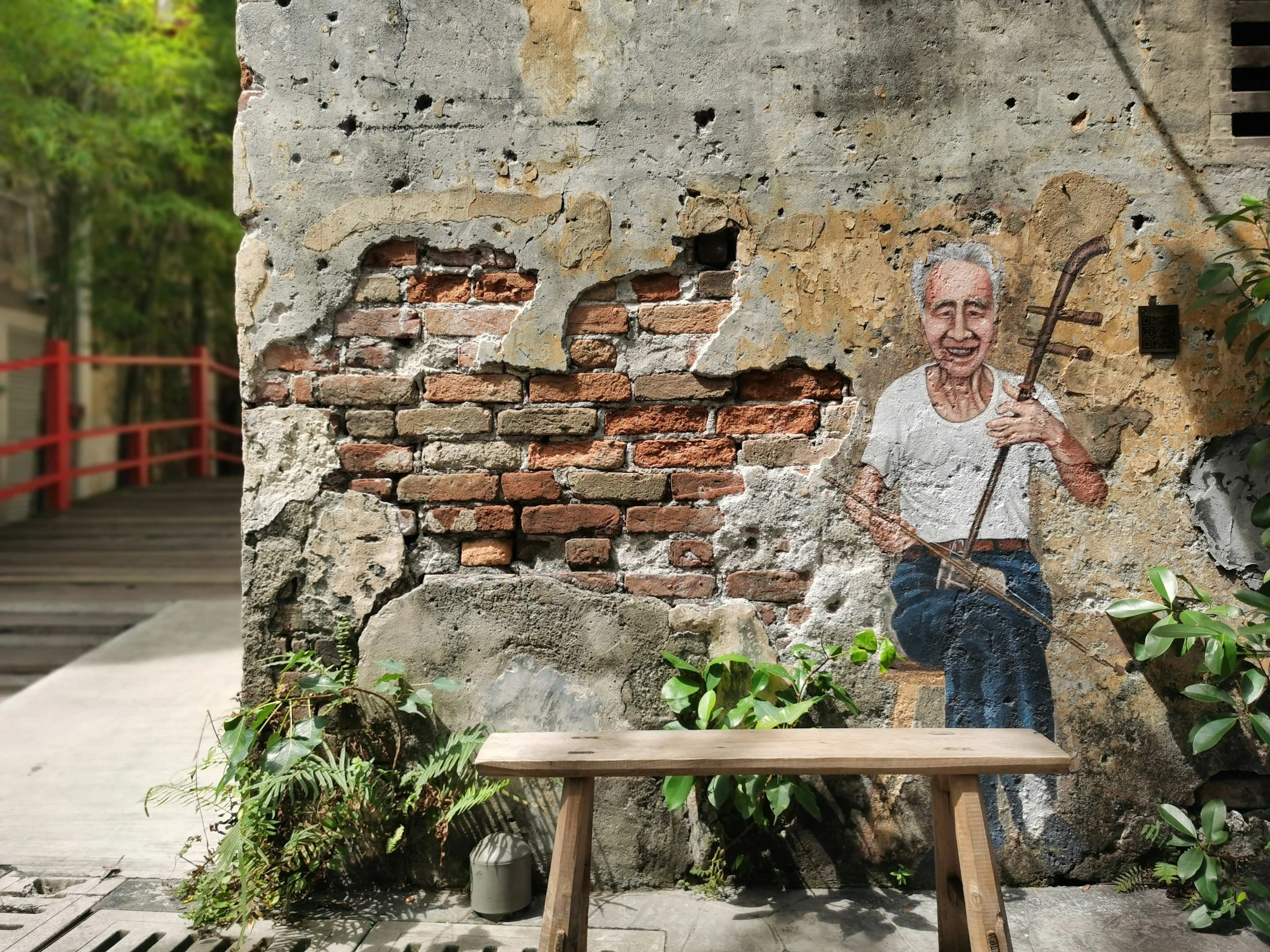
Not long after the sirens wailed
The open range I'd be
The children were the cowboys
As happy as could be
Sometimes I'd be the Mongo scape
King Arthur's seat of power
The feet would patter over me
Until the Children's Hour
My cobbles were a cricket pitch
The terraced houses stands
All day the ball went to and fro
From pairs of tiny hands
Then one fine day they made the choice
To tear the houses down
Now buses come and stop on me
From all over the town
And now a crooked man sits down
Upon my plastic seat
I realise it wasn't there
When last time we met
He was the singing cowboy
Donald Bradman, Arthur King
Flash Gordon on a Saturday
On Sundays he'd be Ming
He's slower now, walks with a stick
Is grey and wrinkled yet
He makes it very clear to me
Today marks no sunset

Flooded
by Kev the Poet
And I always return, here when my
brain is flooded, lacking a spark.
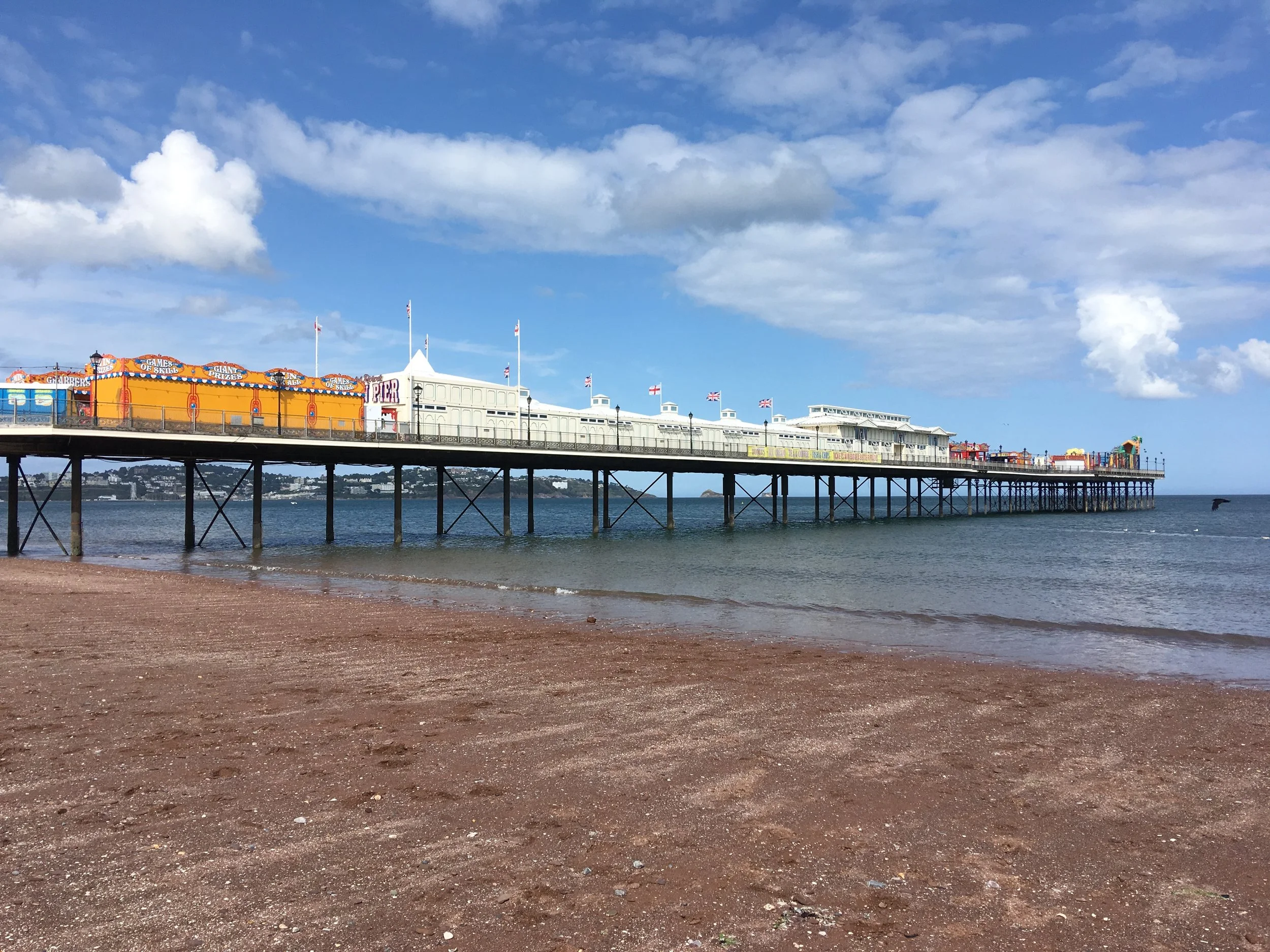
This faded seaside town is shifting.
There is still 80’s pop in the air
accompanying the machines
that never pay out, useless grabbers
that will never hold a Labubu
or a Pokemon, a Grogu.
The ice cream shop closed years ago
(I only tried 6 of the 99 flavours)
Children gaze at complicated Lego
of superheroes in toy shop windows.
The cinema is still too cold
but I got to see that film I missed
(a criminal waste of Jodie Comer)
about climate change, motherhood.
And they’re building flood defences
behind the cinema, against the beach
to protect the town from the sea
One day, there will be no music
Labubus will swim, no superheroes.
Where can your cerebellum swim
when seaside refuses to take sides?
Paignton
by Kev the Poet
Artist Bios:
Lydia Unsworth
Lydia Unsworth's work has appeared in journals and anthologies including Abridged, Ambit, Bath Magg, Berlin Lit, Honest Ulsterman, Oxford Poetry, Salzburg Review, Shearsman Magazine and SPAM. She is a PhD candidate at the Centre for Place Writing, MMU, looking at kinship with disappearing post-industrial environments. Her latest collections are Stay Awhile and This Now Extends to My Daughter, both published in 2026.
Annie Acre
Annie Acre, the editor of Urban Scrawl, is a surveyor/poet & strange storyteller whose work has appeared in Ink Sweat & Tears and Worktown Words as well as spoken word events around Manchester. She hopes you like what she’s doing with the place x anniesacre.co.uk @sylviasdrum
Linda Sunderland
Linda Sunderland, ex teacher from Burnley, is returning to poetry, her first love, after a novel and many children’s stories. She writes of her own past and the history locked in place and its inhabitants
‘Heptonstall Pensioner 1963’ was inspired by a book a photographs of the area surrounding Heptonstall. An old man sits on the edge of a wooded gorge. The village is forever associated with Ted Hughes and Sylvia Plath who is buried in the graveyard there. I imagined the man knowing Ted as a child and talking to him after the funeral .
‘Looking for the perfect shot on Heptonstall Moor’ followed a session taking photographs of the moor and realising how impossible it is to. I found signs of human presence in the graffiti on rocks and focused on the people who had fleetingly escaped the towns and come to that bleak remote spot to find something personal to take back with them from that day.
Andy N
Andy N’s poetry collections include ‘Changing Carriages at Birmingham New Street’ and ‘From the Diabetic Ward’ and is the co-host of Chorlton’s Spoken Word night ‘Speak Easy’. His music / band credits include Ocean in a Bottle, Polly Ocean and Ward and his Podcast credits include Spoken Label, the Writing Way and Not the TV Guide. His novels include ‘Birth’ and ‘Death’ and he has just bought out his debut short story collection as A.E. Nicholson as “ Threads and other stories of Isolation”. https://linktr.ee/andynartist
Scott Ferguson
Scott Ferguson is a recovering businessperson who refuses to be part of the problem. So, he writes (mostly poems) about politics, history and various forms of waking up. He lives in Los Angeles, California with his wife and their two dogs. Follow him on Instagram @scottwferguson.
Kev the Poet
Kev The Poet was born in Liverpool, but is now resident in Mid-Devon. He began writing poetry in 1991, after finally getting it and a response to unrequited love. He began again in 2022, as a response to the preventable rise of fascism. His work has been published in the American poetry magazine Shine, he has been broadcast on BBC Devon and also contributes a weekly poem to Shaun Keavney’s show on Community Garden Radio. He gigs across the country - You can find him on Insta @thekevthepoet.
Joe Tetley
Joe is a gay, autistic poet living in Manchester. He uses poetry as a form of expression to record feelings and emotions that may otherwise be left unsaid, regularly performing at spoken word nights across the city.
Matt Tyler
Matt is a Darwener with Manchester as his home away from home. He loves reading and writing stories about time travel.