Intro from the Editor
Welcome to the second edition of Urban Scrawl.
It used to annoy me when editors of literary magazines talked about an “emerging theme” in the submissions (with the implication that they selected some works based on their compatibility with a theme which no contributors could have known about).
Now I get it. While, in this zine’s format, which is set out like a stroll through a city, pieces which clash can work just as well as those which flow, there is something satisfying about seeing how writers, at random, rhyme.
The first edition took me by surprise with religious depictions of urban life.
This second edition seems to explore the ghostly, haunting, otherworldly side of the city.
It’s been said that, if ghosts were real, they wouldn’t just appear in rural mansions, they’d be swarming all over our densest areas. Yes, the artists in this edition seem to say: here are the urban ghosts, all around us.
Which side of the city haunts you? Is history a form of haunting? How, and where, will you remain?
Thank you to all the artists whose words and images possess this page. Their bios appear at the end - please visit them, or else…
Look out for their presence on Instagram too: @urbanscrawlmag
Happy strolling and take care out there,
Annie Acre x
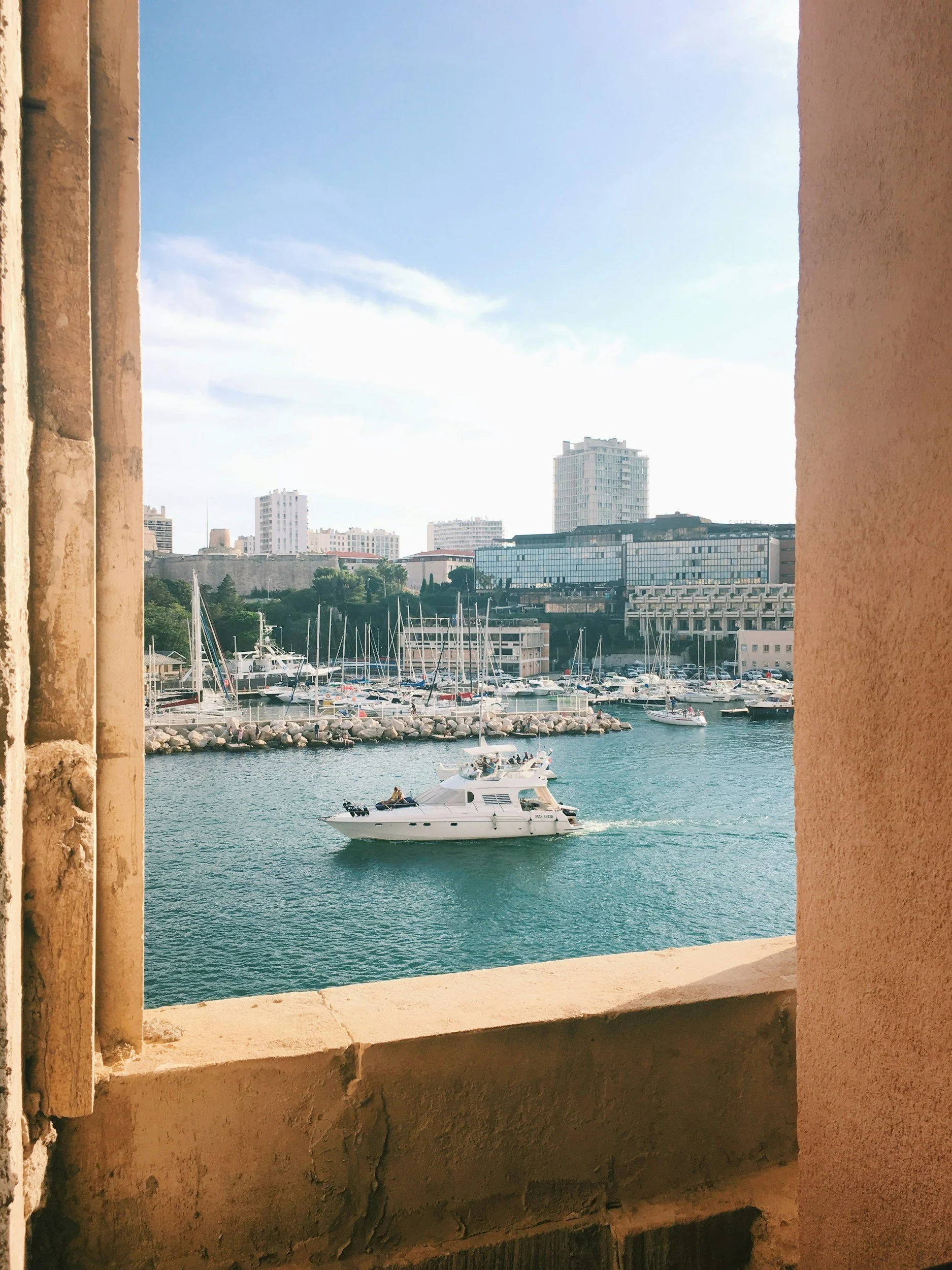
All the Statues Face the Water
by Pip McGough
Marseille, waking up
with one eye open—
the other, dreaming of Algiers.
Blood on the tiles, fish bones in the drain.
All languages misremember here:
French that wants to be Arabic,
Arabic snagged on Kabyle,
Greek consonants
buzzing in the laundry steam.
I buy bread (in English)
and a woman says:
C’est pas ici le pain, c’est là-bas.
What I hear is:
Nothing is here, everything is elsewhere.
The sea agrees:
it hums like a bored official.
At the harbour wall
a handsome old man sells postcards
of the towns no one returns to.
I buy one of Oran,
address it to my father (six years dead).
He never told me where he left his name.
This is how the city writes itself:
on the soles of your feet.
And if you stay long enough,
even your silence
will speak with an accent.
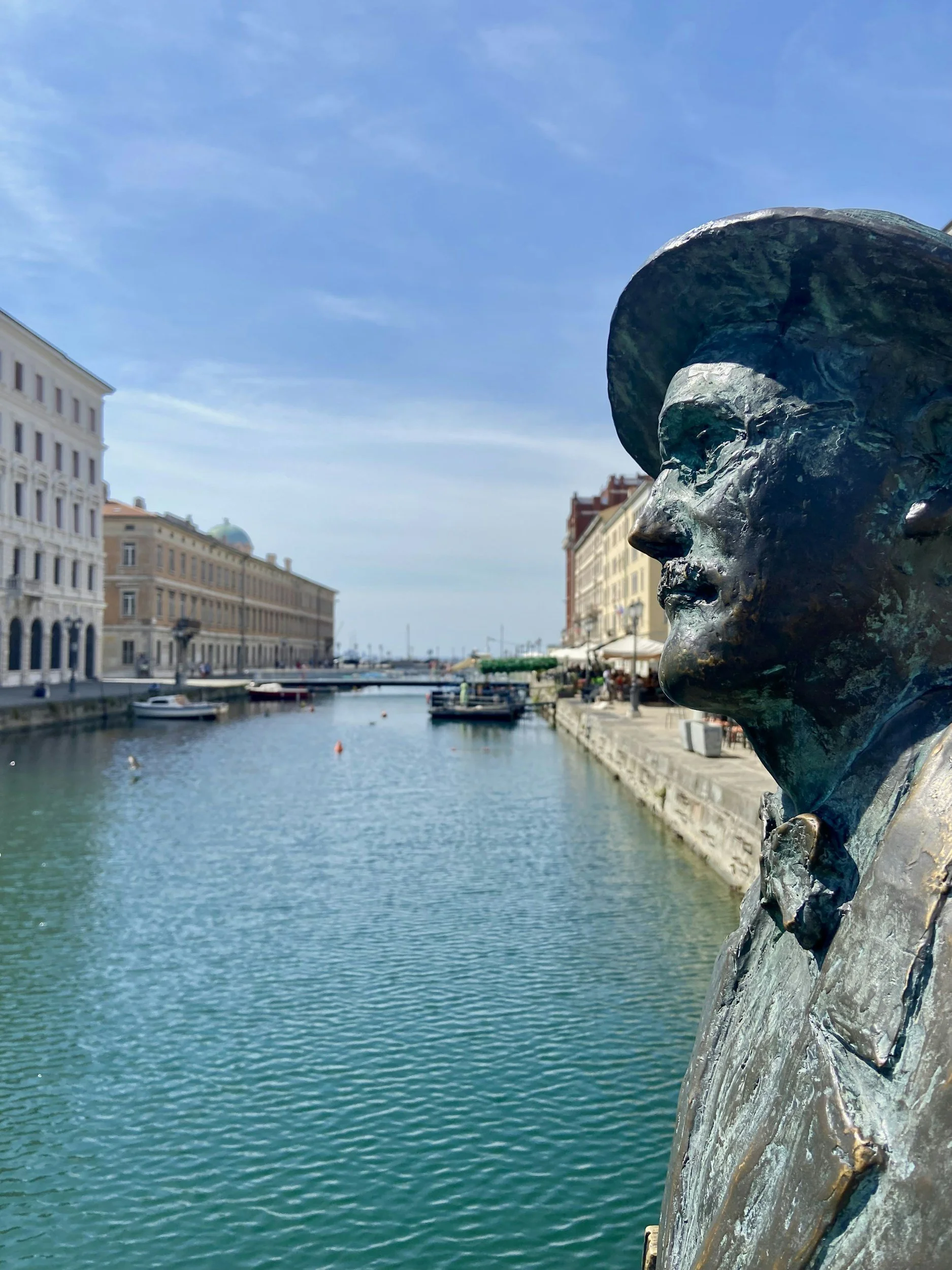
Postcard from Trieste
by Pip McGough
The hotel has changed its name again—
a nod to progress, war, amnesia.
The room is damp, with shutters
that stick halfway. The sea:
a silver light behind the curtain.
I’ve unpacked my books,
a scarf, and your last note,
creased like something learned by heart,
never quite believed.
At dinner I ordered local wine—
dry and floral, the kind you’d call “minor.”
The waitress, too young to flirt,
addressed me as professore.
I let her. My jacket had made the decision.
Downstairs, a girl is practicing Verdi.
She misses the high notes, but not by much.
In this city, the mistakes have two strong lungs
and excellent posture.
Wish you were here.
Or—no, not that.
I wish—
I wish I were still the man
you’d write back to.
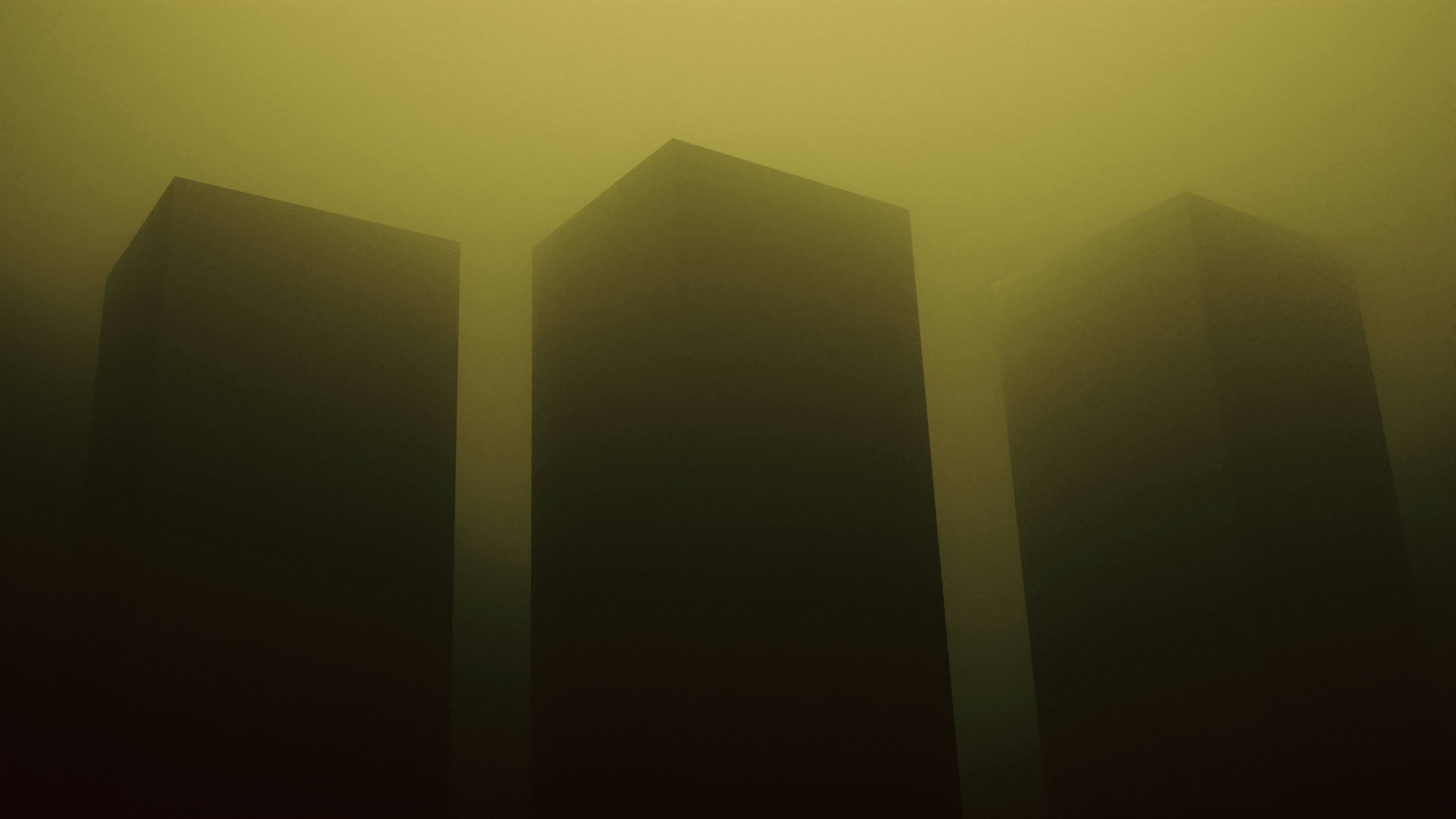
How to Live inside a Dying City
by Pip McGough
The smell of new paint is not to be trusted.
It means:
someone is trying to sell you something.
Walking: to be done slowly.
The cracked pavement has songs to teach you.
Should you hear music
leaking from a basement window,
make sure to stop and listen.
Pretend it’s a scene from your childhood,
if it helps.
Eat cheap bread.
Drink the limited-edition Baileys only on special occasions.
For example: when someone you love abandons you,
mid-sentence,
and you’re no longer sure what to do with your hands.
Nod to the man
dozing on cardboard in the gutter.
In many respects he’s doing better than you.
He sleeps.
Bear in mind that every window you pass
is another person’s movie.
You’re not the star, not the villain.
You’re just a moody stranger who drifts by,
and doesn’t look up.
Don’t marry anyone who wants to fix things.
Instead, fall for the perfect one
who knows how to sit quietly in a room
while everything proceeds to ruin.
Keep spare cash in your sock.
Keep spare spite in your voice.
Keep showing up.
When the lights finally go out:
do not pray.
Wait.
The dark, the last democracy,
belongs to us all.

Walking to Uetliberg
by Matt Gilbert
Having never been this way before,
the whole place is first impressions.
Zurich feels too neat,
too scrubbed, despite stone wolves
above the doors. I leave on foot,
to seek some edge,
exit via an underpass and note
the curve of a long and slender
neck, bent towards the west.
Half-hidden among a scattering
of small white stones. Heron
as a grain of TV static,
adrift in chiaroscuro space.
An accidental cathedral, lofted
beneath the bellow of an autobahn.
This road, a thunderous roof,
where speeding cars preach
urgent sermons of dominion,
over a tamed trickle of the river
Sihl, at the point where it merges
with the larger Limmat.
I lope on, seek further city fringes.
The grey bird stays statue. Devoted,
solely to cold and transitory fish.
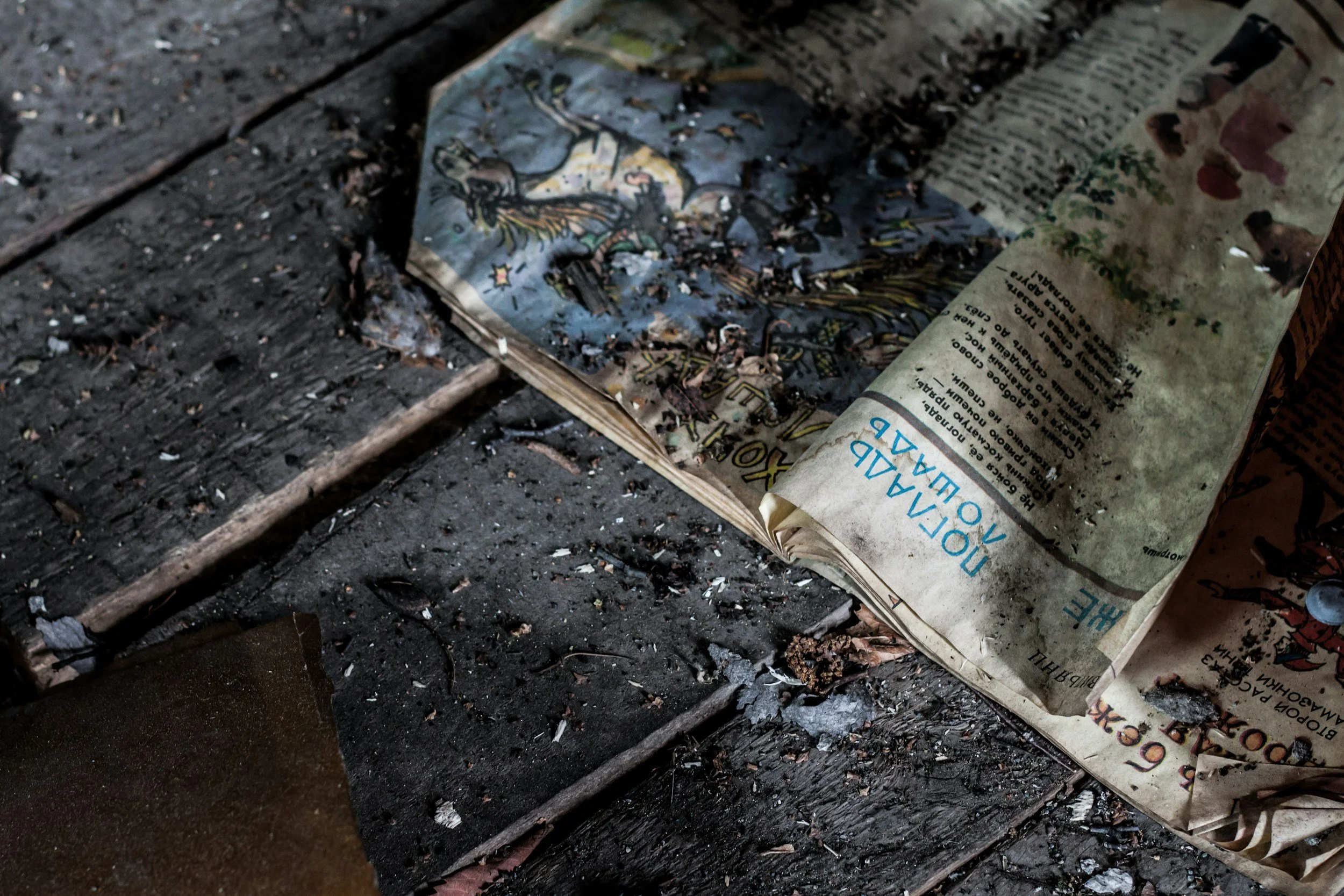
My early places were filled with ash
by Matt Gilbert
Ashley Down, Ashley Grove,
Ashley Hill, Ashley Road.
On Narroways Hill
and Ashley Vale Allotments,
shallow roots erupted,
through the lanes,
embedded deep in local names.
The Venus of the woods,
prolific, in this Bristol corner.
Scattered round, tree confetti,
squeezed above train tunnels,
plugging gaps
across St Werburghs.
Marching to Lockleaze,
via Boiling Wells. Fast-grown gifts,
present in such numbers, it seemed
we might take their company
for granted. Until abruptly,
we could not. Black buds, became
black marks. Terminal leaflets
started to sound ominous, once
the changing had arrived.
Thinning crowns, failing shoots,
put local street sign names
on notice. Entire postcode forests
to be felled and stripped of context.
Old Ash not thriving,
simply persisting, under
suspended sentence. Consigned
to man-assisted death,
via fungus, or if not that, then beetle.
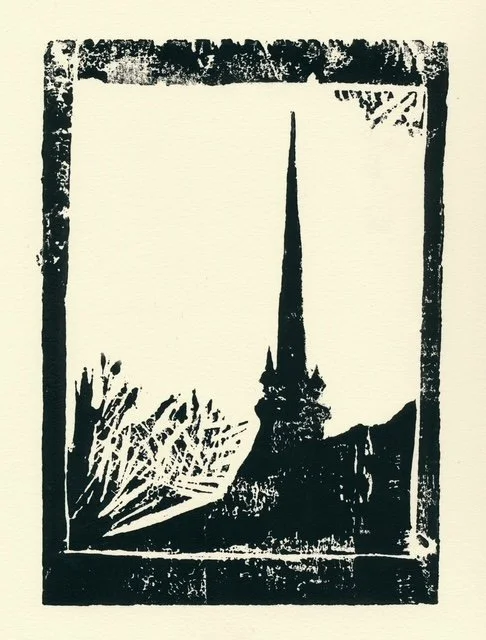
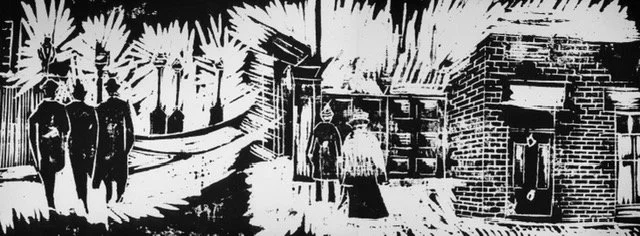
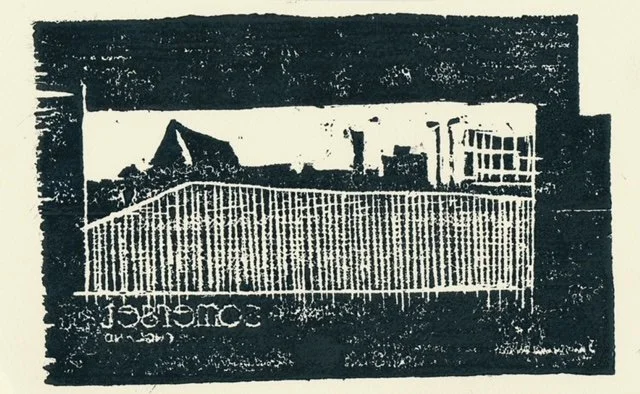
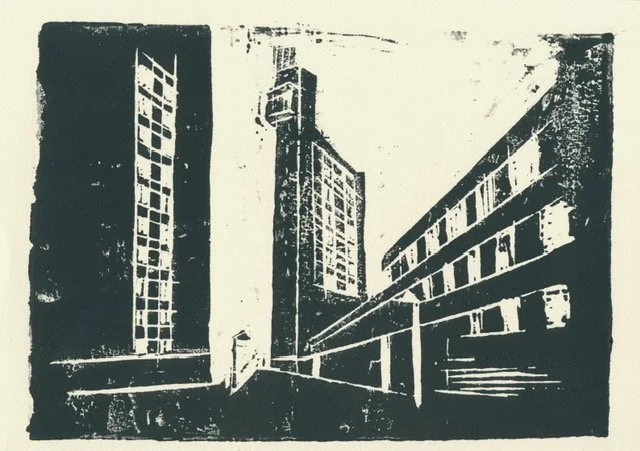
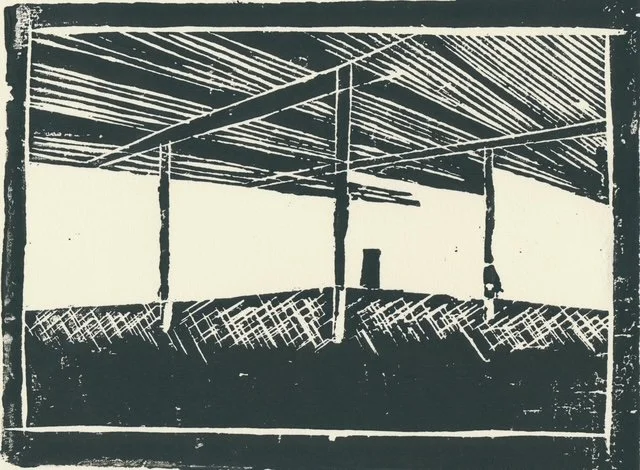
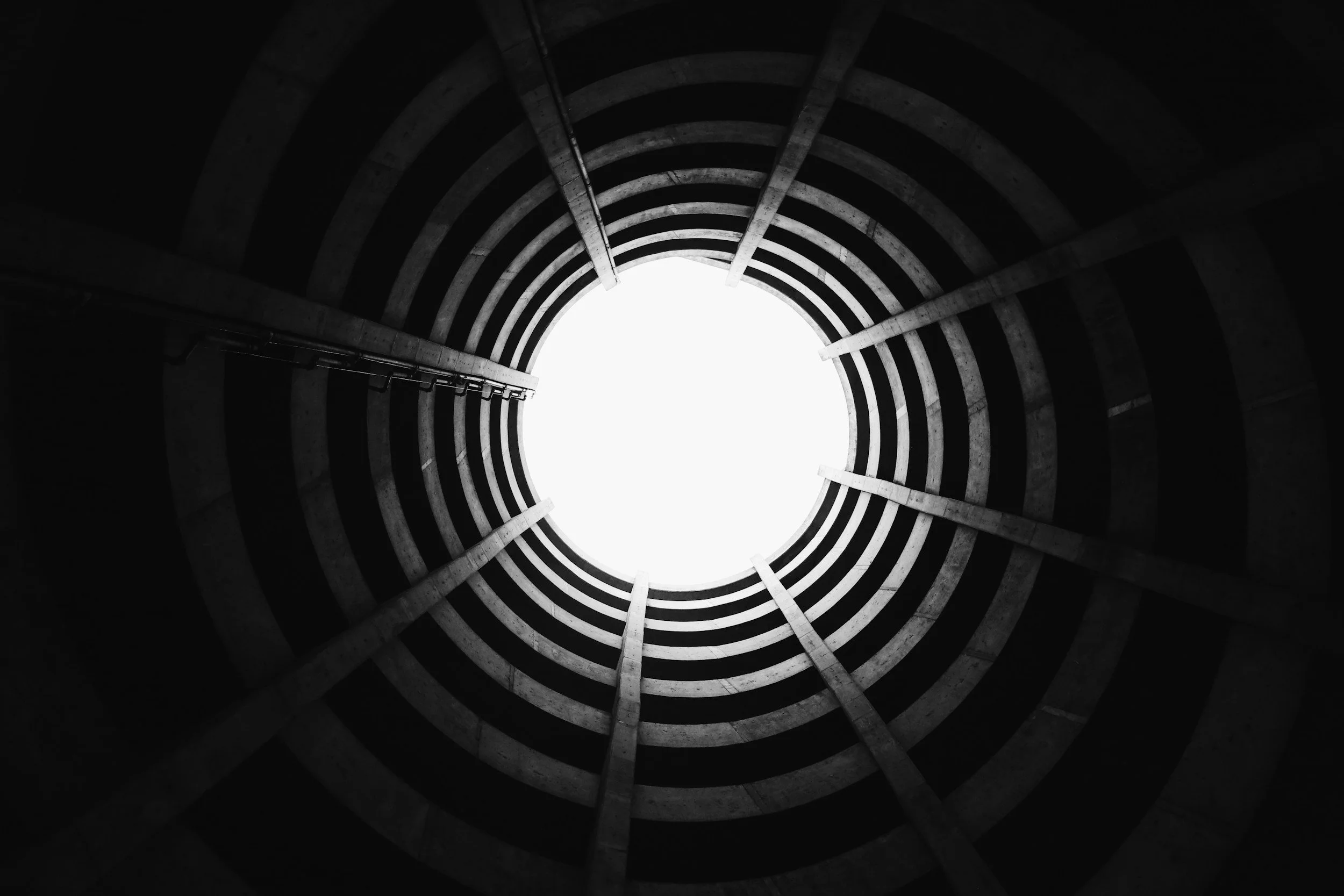
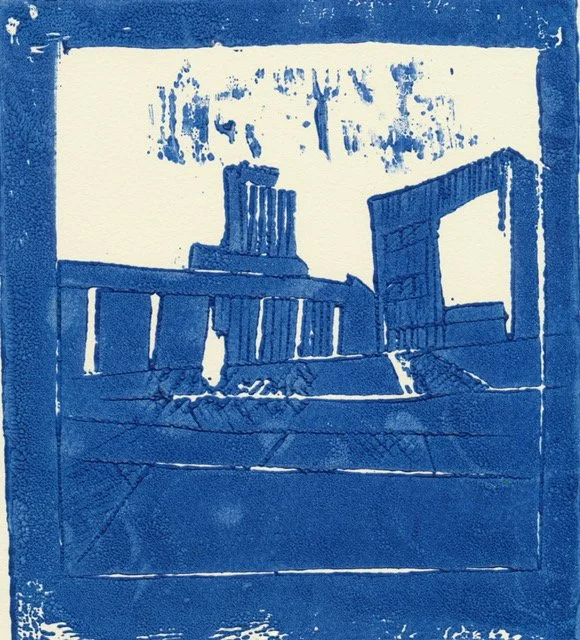
Woodcuts in black
by Daniel Sayer
City of Ghosts
by Dawn Kirby
The hole
in the road—
A giant
cervix, dilated.
Thrust forth
its bastard children
into Sheffield’s
molten steel.
They became
poets of anarchy—
Weaponised
guitars and synths.
Fired off
post-punk politics
into the guts
of a New Order.
Beyond
The Crazy Daisy—
The Cabs—Dada
on West Street.
Deaf to
London Calling—
The concrete kids—
Pioneers.
The pubs:
a Free Church—
gobbing
another dawn.
We were ghosts
in a fish tank—
Surfing the crest
of a theta wave.

The Boggart of Booth Hall
by Tony Potts
Down a road where a children's hospital once stood
On the other side there is some woods and in those woods a Boggart lives.
I’d stand and stare from the ward at the branches dark and tall
And hear the creature whisper through the hospital walls
It never had to cross that narrow way
It simply watched and learned to play.
Reflecting shadows in the fading light
With the quiet, clinical fear that held me tight.
It was the guardian of memory's deep
The shape of all the fears I tried to keep.
It didn't need to wear a monstrous guise
It just became the dread behind my eyes.
The Boggart needed no folklore to feed,
No cloak of myth to meet its crushing need.
Its terror was what held me tight
On those long cold journeys down corridors so bright
Always lay down as the ceiling lights went past
A blur of speed, moving too fast.
I never saw the face that pushed my bed,
Towards the room where fear and slumber wed.
It wasn't human hands that steered the fright
But that same dread, disguised in sterile light.
For every corridor I traveled through
The Boggart was the one that followed, too.
The air grew thick with chemicals and dread
A cold, unyielding silence 'round my head.
The theatre lights, a blinding, cruel white shine
Erased the world and marked the narrow line
Between the waking and the falling down
I was alone, without my childhood crown.
Reduced to silence, small beneath the gown
A bitter helplessness, a frozen weight held me down
Delivered neatly to the hands of Fate.
Then came the fog, the count that couldn't wait
As they tell me there's a prize if you make it to 10 and you're still awake
1…2…3……
And on waking up, the world was cold and slow
A muffled buzz where voices ebb and flow.
I saw the blur, retreating from the scene,
A dark, fast shadow where the light had been.
It shed its guise of necessary care
And left the room, dissolving into thin air.
It was the Boggart, finally unfed,
The same cold terror pushing back my bed
And now I know the fear that kept me small
Was never just the hospital’s cold call.
It was the Boggart, shaped by what it saw
An ancient monster now held by modern folklaw.
I now drive the road and the woods are still right there
But on the other side the past hangs hollow in the air.
But the Boggart lost its power on that day,
When I stood up and chose to walk the other way.
Manchester Pusher
by Tony Potts
Down cobbled canal paths, where the city lights grow dim
A whisper stirs, a chilling morbid hymn.
The Manchester Pusher, a name that chills the bones.
A phantom hand, lives overthrown.
By canal’s dark edge, where the waters softly creep.
A sudden stumble, secrets buried deep.
No witness stands, no culprit to be found.
Just silent ripples, on hallowed, haunted ground.
Theories spin, of malice, cold and stark.
A spectral figure, lurking in the dark.
Is it a myth, a fear that takes its hold
or is it something real, a story yet to be told.
The city’s heart, a pulse of anxious dread.
Where shadows dance, and whispered words are spread.
The cobblestones, they hold a silent plea.
For truth to surface, for eyes to clearly see.
The Manchester Pusher, a name that chills the air.
A haunting legend, a city’s dark despair.
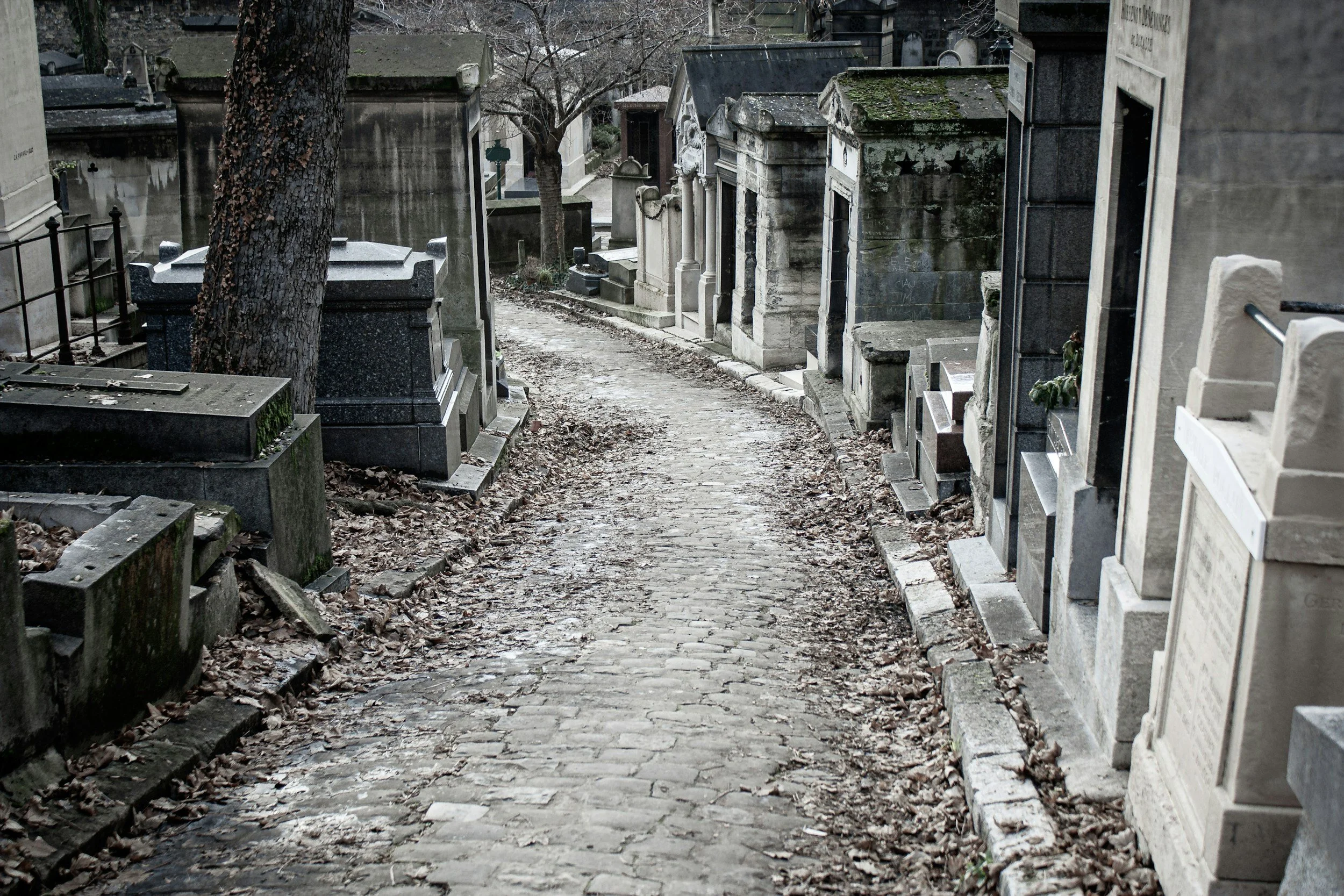
City of the Dead
by Tom Priestley
The wild boys are at home supping homebrew
While the wheelers pull tricks on the streets
The sure thing is at home with her fella
Who is always rarely seen
The pubs closed up by half 6
And the takeaways no longer cheap
The haven of the city centre resembles
The coast during its off peak
Living is costing far too much
And you are hardly ever at home
Families all in separation
Due to contracts that lead to zero
The atmosphere is null N void
Because nobody can be bothered
No cash on the hip no light to trip
For the darkness always hovers
Over the heads of the hopeless dreamers
Who thought life would be an endless party
But mardi gras has ended and they are suspended
In a routine of endless calamity
Led by sheep that count themselves
In order to be unconscious
Just to dream of the daily routine
And awake within the midst
Of the disorganised structure
That holds no discipline or
Any true maintenance to nurture
As we long for the killing floor
That lingers on the edge of burning out
Birds without wings hurtling towards the loophole
Not needing, or wanting to be anything
In a city of the dead
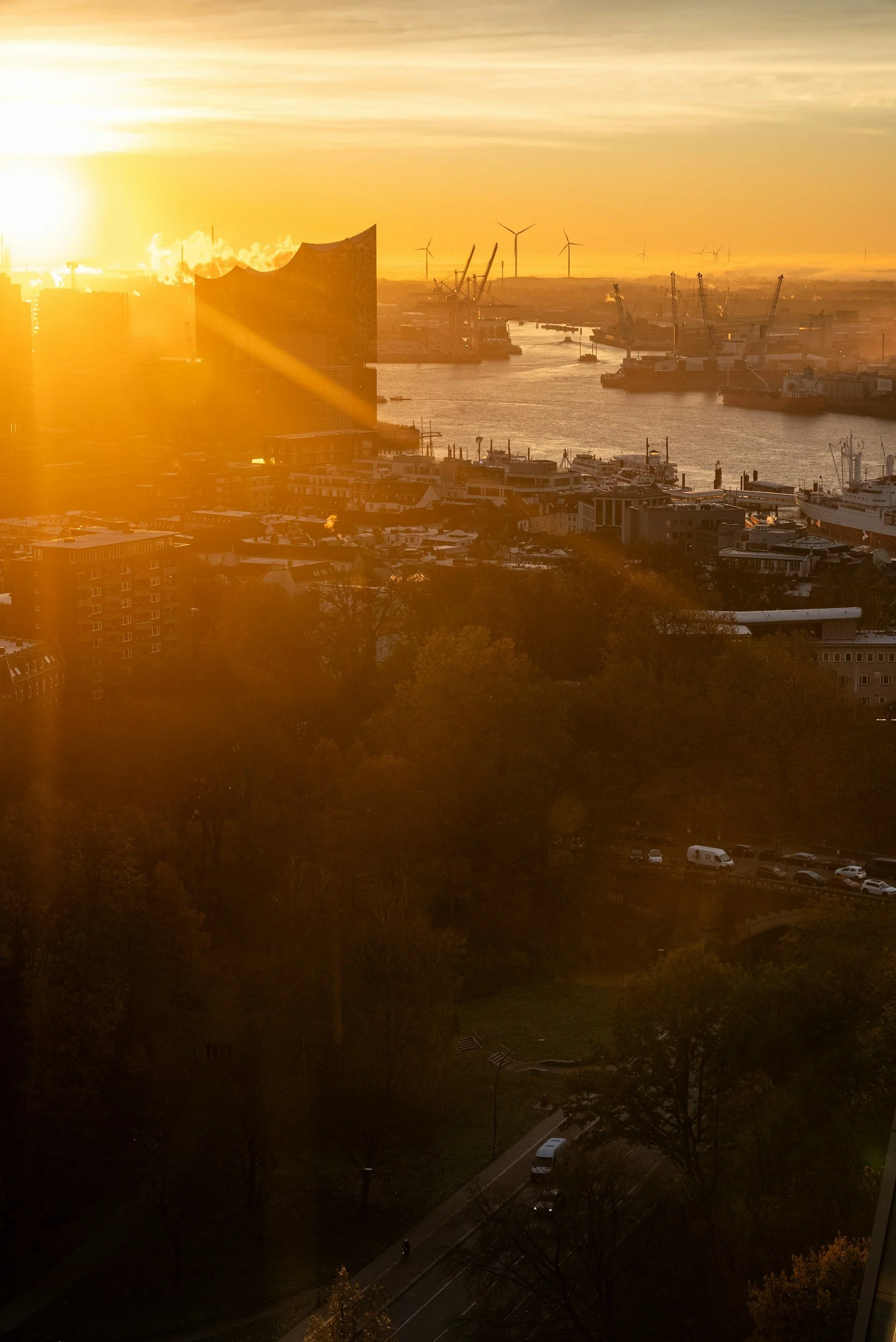
For Ever A Day
by Tom Kyle
Back to the wall
Eyes to the ceiling where
pendant light leaks onto
every cobwebbed corner
Wade ankle-deep in sunbeams
through unshaded city
Mind smacking lips in
a parched cry for moisture
Floating islands beckon with
buried treasure reckoning
Useful things mistaken
for things that can be used
Night falls brightly onto the neck of sleep
Fangs bared
Cloak drawn back
Victims stumbling blindly
through luminous streets
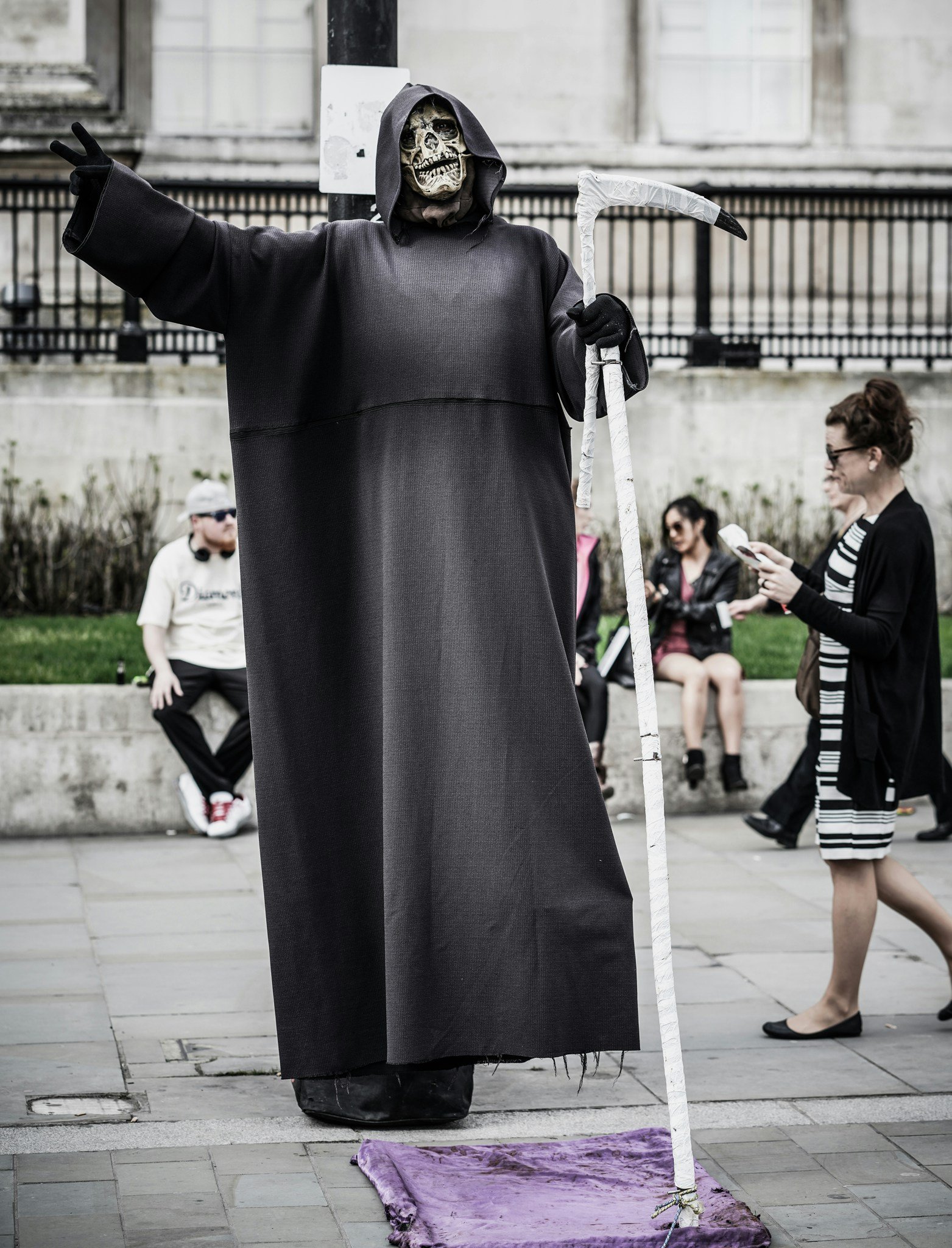
Mad, Unforgettable, Invisible
by Matt Tyler
There’s an underground world in society and nowhere is that more apparent than Market Street in Manchester.
Now, it isn’t alligators in the sewers or a mutant rat teaching its mutant amphibian charges the arts of ninjitsu (although that would be quite awesome). No, it isn’t physically underground. It’s there on the street for everyone to see. It’s subterranean in a social way.
Most people who spend large quantities of time on or around Market Street work there or near there. In the offices. In the shops. In the bars and restaurants. But there’s another group of people. In an eight hour day, they never seem to leave Market Street. They stand there, day in day out, with small bowls in front of them for change. And they wear costumes. Mad, crazy costumes.
One guy wears a Darth Vader helmet and sits at an 80s style synthesiser belting out tunes from American action cartoons. Although sometimes he wears a Cyberman helmet (I presume it’s the same person, as I’ve never seen them together and the overall level of playing skill seems to be the same whichever mask he’s wearing). There’s a living statue wearing all white, he even paints his face white. He has this gift for standing perfectly still until someone speaks to him, or even better, poses for a selfie with him. Most remarkable is Bumblebee. As in the Transformer Bumblebee. He wears a suit that makes him look like the popular Transformer, and when he crouches down, it actually transforms into a kind of yellow go-cart. Then he rolls around for a bit, gets up, and he’s a robot again (where does he get his money to pay for the suit, by the way? Surely there’s no such thing as capital expenditure for someone who works with a money bowl in front of him?)! Sometimes I see them on their breaks, masks off, drinking tea from styrofoam. They all seem to have foreign accents, but speak to one another in English. So while we work in offices and shops, these guys exist in a fairly loose knit community, entertaining and hoping that passersby will have enough sympathy for them not to leave their bowls fully empty.
So there’s Darth Cyberman, Living Statue and Bumblebee. And then there’s Ricky.
Ricky doesn’t have a particular costume that he wears. Just normal street clothes, along with a postman’s cap or maybe a policeman’s helmet. He’s maybe fifty years old, bald (I’ve seen him with his helmet off) and eyes that point in slightly different directions. Without fail, every lunchtime, there he is dancing to 90s techno tunes outside Primark. He has a little radio that belts out the tunes. His dancing is terrible, he certainly wouldn’t win any competitions. And he looks ridiculous. Absolutely ridiculous.
Not only me, but several people in our office have noticed him. They call him “the Dancing Nutter” or “Nutjob”, but one day I heard someone call him “Ricky” and so an office legend was born. And then came the temptations I couldn’t resist: talking to him, cheering him on, asking him to do a little dance for someone in the office who had a birthday that day so I could record it on my phone. Actually, for all his craziness, he seemed like a really nice guy. But we all agreed: he was crazy first, nice second. As I got to know him a bit better, I realised he must have some problems. He never spoke in full sentences (although he didn’t have a foreign accent), he had a collection of really old stamps, and he also had a police badge that looked real. Maybe he’d had a really interesting life, but I had neither the time or the patience to pry. But whatever life he’d had, now he was in a rut.
Never was this more clear than one lunch time where I found him in his usual place, but not dancing. At first I didn’t know what was wrong. “My stereo! My stereo!” He was shouting. There he was, hunched over the broken machine. I couldn’t get the full story out of him, but a couple of people said some boys had come past and kicked it. My blood boiled. Why would someone want to upset someone who was nice and already clearly troubled? I did what I could to try to fix it but repairing it was clearly beyond me. How was Ricky going to survive? I mean, living wage in the UK is twelve pounds per hour. That meant that to get what the government says you actually need to survive, someone would need to put a pound into his bowl every five minutes. Sure some people could put more in, like I did when I asked him to do a little ditty, but how many people put in less? And how many people put in nothing at all? These questions dogged me all through my lunch break, and into the next day, but next lunch time I found him dancing again with a new stereo. Had someone been generous to him? And should I have been ashamed?
And so life went on. Good old Ricky.
Sometimes he lurked in the shadows. One night after work I was spectacularly dumped by my girlfriend over the phone. I could scarcely hold back tears as I begged her for one more chance. I heard some footsteps behind me, hoping I hadn’t potentially embarrassed myself in front of someone I worked with. But it was okay, it was only Ricky. He probably wouldn’t have had a clue what was going on anyway. Similarly when I got upset on a lunch break when my dad called me and told me they’d had to have their dog put down. I was so upset I didn’t care people could see my crying this time, but when I paused in the street to wipe my eyes, I was glad that it was Ricky I happened to stop in front of. “Y’alright, mate?” he muttered, then turned back to his stereo and had probably forgotten about the whole thing within the hour.
And then about a week later, everything changed.
I had to go into work on a Sunday. Well, I didn’t have to exactly, but our office manager insisted. Now he didn’t insist that we used software fit for purpose, or that the temperature in the office met legal standards. But for me to give up my Sunday, oh what a priority! I was fantasising about what I’d say to him if I won the lottery as I turned onto Market Street. It’s quieter on a Sunday that on a Saturday, but there were still people on it. But I quickly noted something was wrong.
There was lots of shouting and people were keeping to the sides of the street. A man darted out of an alley and it took me a second to realise he was heading straight towards Bumblebee! I had visions of him hunched over in sorrow amidst the remains of his costume like Ricky had been when they’d smashed his stereo. But then something strange happened. Very casually, Bumblebee transformed! The man running couldn’t stop in time and tripped up over him. As he got back to his feet, Bumblebee transformed back into a robot, walked up to the man, punched him so that he fell down again and then sat on him! That was weird. I’d never figured Bumblebee for a violent type, but hey, live and learn.
But the sound of sirens approaching led me to realise something else: something was terribly wrong. I couldn’t quite work out what it was until I realised Ricky wasn’t at his usual place! Had something happened to him? Had someone been even meaner than the boys had been that time and done more than smashed his stereo? I started to run to his usual spot, but never got there: in a road off Market Street was a Securicor van with its doors open and its two drivers nursing wounds. There was a robbery in progress! And as crazy as it seemed, Bumblebee had actually stopped one of the robbers. But I was about to get an even bigger shock: as I stood there gawking, a man was directed from behind the back of the truck, hands cuffed behind his back. And who was doing the directing? None other than Ricky himself! His eyes pointed in the same direction as he called to Bumblebee in clear unbroken English. “You okay there, Dave?” Bumblebee just raised a thumb in answer. “Okay, Mr Robertson”, Ricky went on, “our vans should be here soon, and then you’ll spend the evening at His Majesty’s Pleasure”. The thief resigned himself and sat down on the ground under Ricky’s stern watch. It was then that Ricky noticed me. “Oh, hi, Steve”.
My dumbfounded face must have been a picture. “You, you know my name?”
“I know a lot about you. I know your girlfriend, Becky, who you’d been going out with for two years dumped you two weeks ago. I know your parents used to have a dog called Baxter. They got him when he was about six, and sadly had to have him put down this year”.
My mouth only opened wider until I managed to stifle, “how?”
Ricky smiled. “Because people don’t care what they say in front of nutters. You think we either immediately forget about it or just don’t understand in the first place. So it doesn’t matter if we overhear their conversations about their love life, their private life, or”, he thumbed over to the cuffed thief, still sat on the ground, “or even their plans to rob a Securicor van. Over the last two weeks me and my colleagues managed to piece it all together. Oh and one other thing”. He put his hand into his pocket and picked out his police badge. “This thing is real”.
I was still gobsmacked through my whole shift. I wasn’t angry at the office manager any more, and I realised there were far more bigger things in the world. Ricky an undercover police officer! Bumblebee his partner! So many things I didn’t know.
We never saw Ricky and his troupe again. Maybe they’d moved to another street, perhaps in Liverpool or Preston and were listening in on other peoples’ conversations. Oh, there were still interesting characters on Market Street: one dressed as either Iron Man or Deadpool (presumably the same person as I never saw them together), one dressed as a frog and played the flute and another one did breakdancing in a ninja outfit with a rubber sword. This all of course begged the question: were they also undercover police officers? Or were they the genuine article this time? Whichever was true, I made sure I never said anything remotely revealing in front of these guys. You never know: they’re mad, unforgettable and invisible. They see things we don’t. And maybe, just maybe it’s we who live in the underground world.
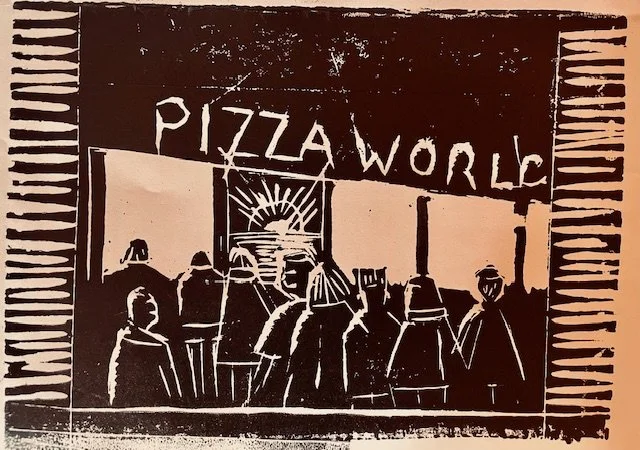
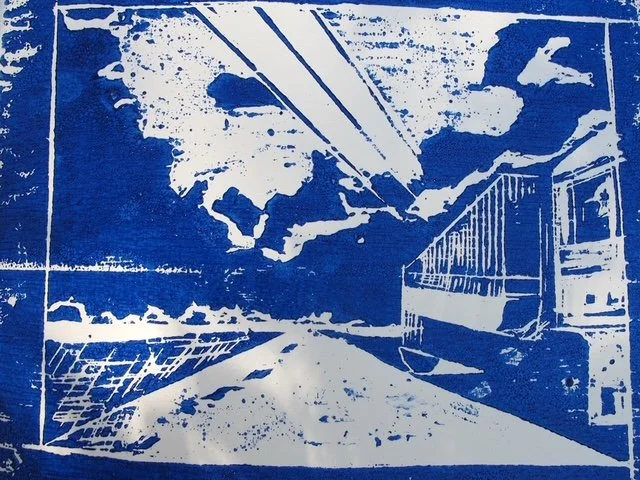
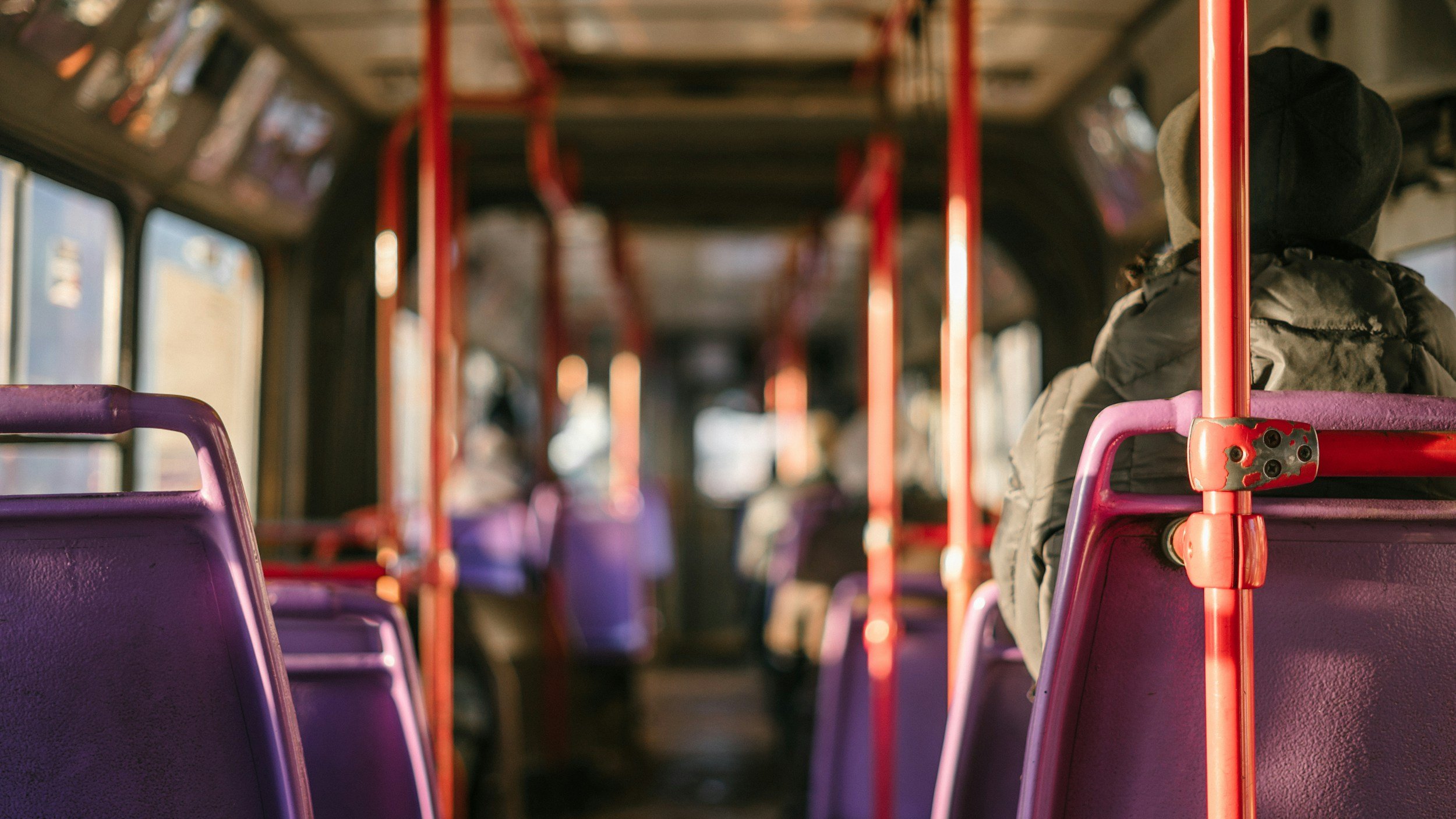
Woodcuts in colour
by Daniel Sayer
Plans
by Kev the Poet
I had magnificent plans today
because the poetry grind never sleeps.
These were to sit in the local
indie bookshop, reading a new
collection with three of mine
in it. Bask in my own glory
(if you don’t do it, no-one will).
Bus delayed, no explanation.
An electric one hummed me to the
wrong end of town. The bookshop full.
Requests for last minute gifts
(too bright to bask in any light).
Across to vandalised bus stop
(still, got a free ride mind).
And you said to me, long ago:
‘Kevin, there’ll be days like these’.
So, I speak to you in quiet places
campfires, cathedrals, long morning walks
where time hangs heavy, latent.
When all my plans go to shit
I sense your shadow sunlit.
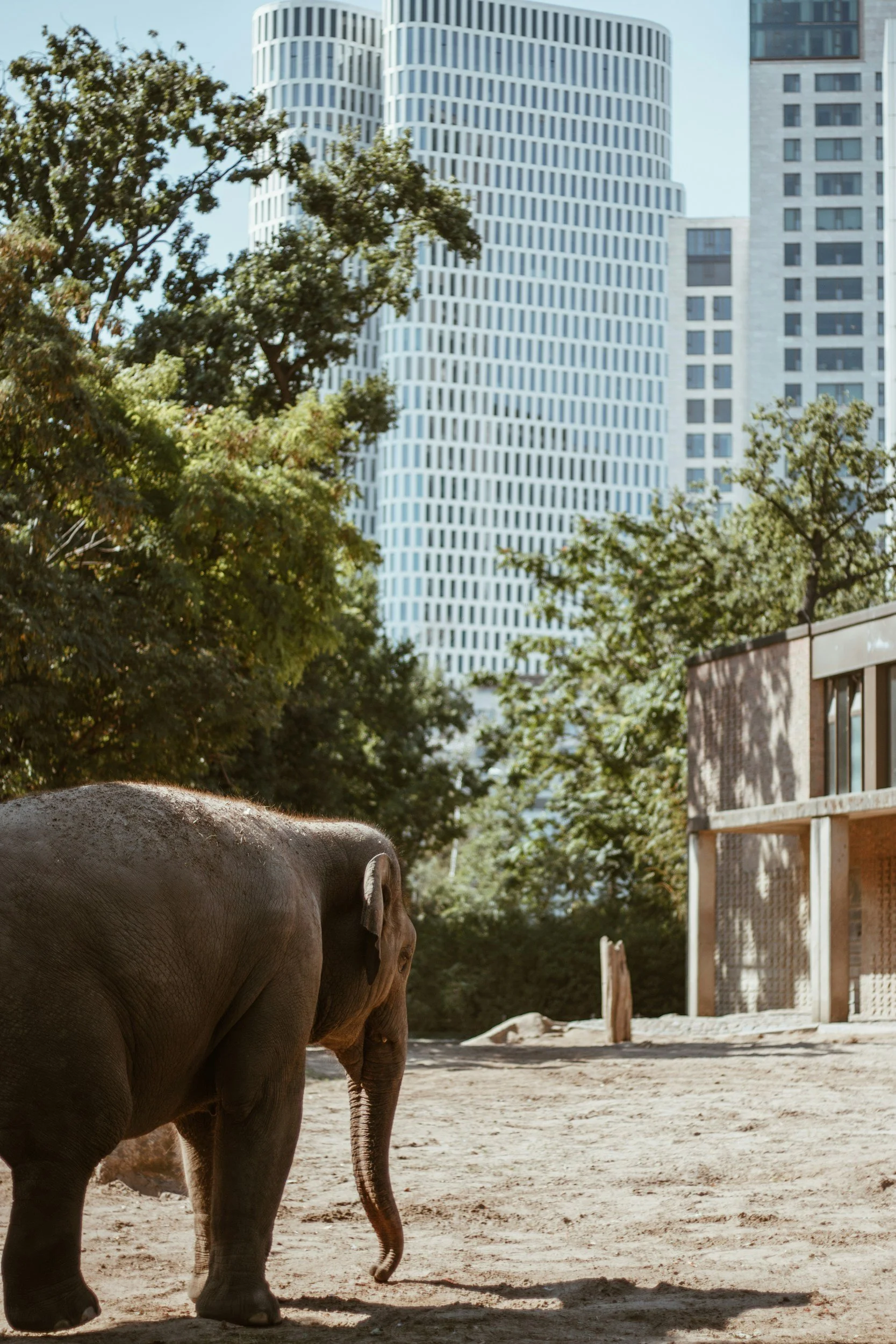
Attenborough
by Kev the Poet
This park, on this, last, turning day
is full of wild, bold animals.
As the sun hides elsewhere, it’s cold.
So, you should have brought hat, gloves as
inland seagulls might well annoy you
but snowbirds will not steal your butty
(petrol station yellow sticker).
Most parklife is late Summer, benign.
Small dogs chase the lost ghosts of squirrels
girls play football (better than boys)
and you are literally a beast
yourself so don’t dodge the title.
You can almost hear the godlike
Attenborough voiceover about
‘the struggle for life continues’
but he never made a film on
us poets, making notes on our
phones, outside a locked venue.
Getting there two hours before kickoff
writing poems about punctuality.
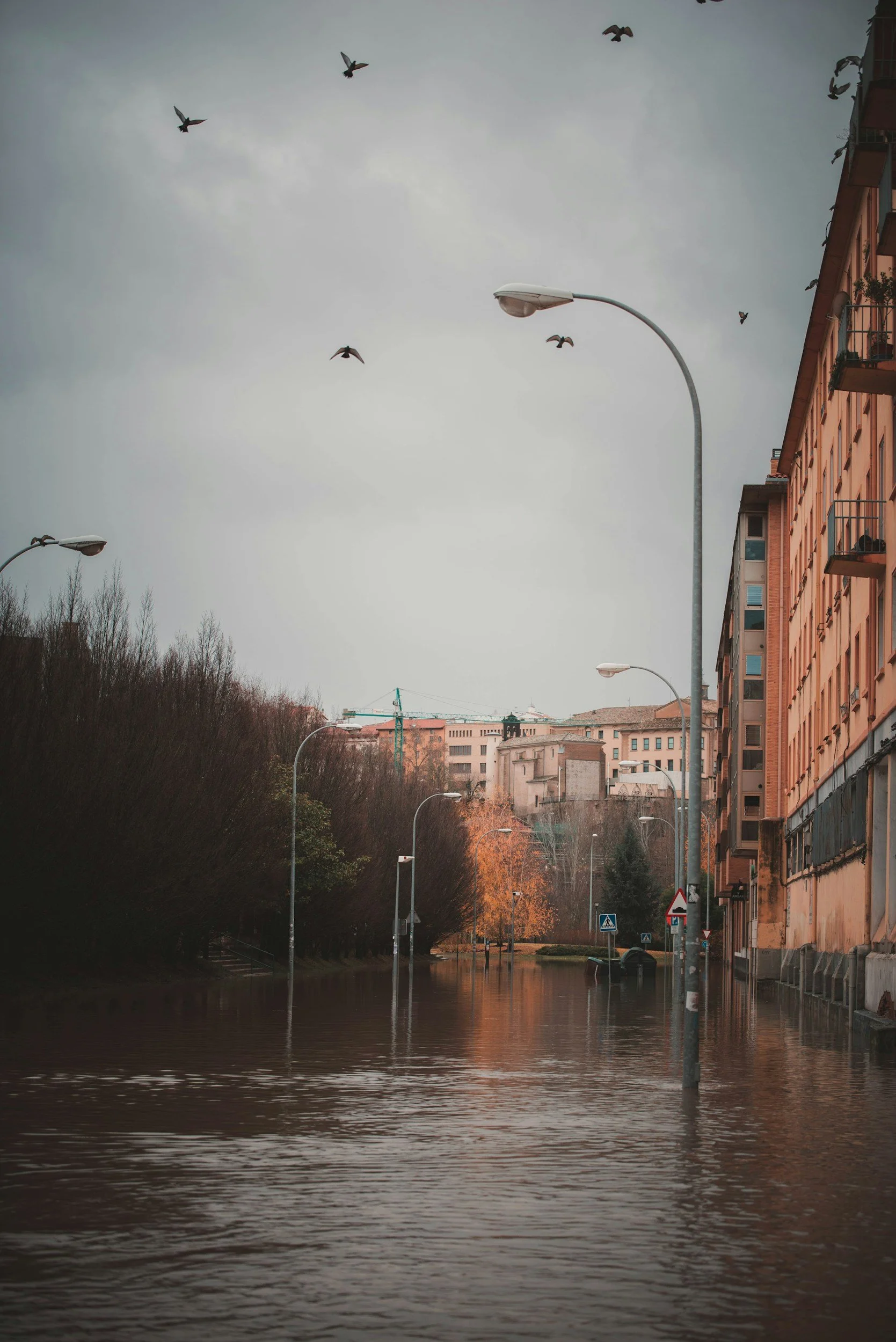
Beastmarket Hill at 4 AM
by Leanne Moden
The air is burger-scented, thistle-damp.
They once kept pumas in the Old Bell Inn.
A giant turtle shifts beneath our feet.
If you listen, you can hear him groan.
I swam so far from shore, I almost drowned.
They had to send a lifeboat out for me.
This city has a taste for the unique;
as dry as desserts: not a drop to drink.
In twenty years, this square will be a shore;
the lampposts all get up and walk away.
And there are feathers all across the road:
they must’ve let the pumas out again.

Walking Distance
by Leanne Moden
Tonight, the hole in my sole
sips kaleidoscopic cocktails spilled
between uneven paving slabs,
slurping oily gutter water like gin and grenadine
until my socks are soaked with city.
Where I’m from, everything is atomised,
homesteads flung across ploughed fields.
Fifteen miles to the nearest hospital;
a flat horizon, uncluttered by civilisation.
But here, everything is easier:
a station, cinema, supermarket,
community centre, chicken shop.
The neon glow of a thousand different salvations;
kebab meat and chips on Monday night.
I can be in the centre in ten minutes,
the hems of my jeans fraying
from the friction, step-counter sozzled
by my sky-high numbers. My legs
stirring whirligigs propelling me to
pub, post office, poetry night.
Even the rain doesn’t faze me here,
chasing commuters across dual-carriageways
smeared with yellow headlights
as run-off gurgles over drain gratings
like the waterfalls on calm soundscape CDs.
It’s seven pm
on some thankless Tuesday,
and this city floats between two rivers,
a wonder within walking distance,
and the barriers between us blur
the same way the rain blurs the bus stop display
“Don’t go anywhere,” it says. “You’re already home.”

Heaven
by Paul Robb
Bombing along,
Far too fast,
Open road before us,
Radio blaring.
You tried,
For the umpteenth time,
To force the Flaming Lips,
Into my ears,
I resisted as ever,
We settled on The Who,
Safe bet for both parties.
You regale me,
With truck driver knowledge,
On the quality,
Of each and every,
Mobile burger van we pass.
Plus,
You point out every toilet stop,
That has your weird obsession,
The Dyson airblade hand dryer,
You fill our message thread,
With a photo of each new one,
You encounter on your travels.
Wherever we stop,
You tell anyone that listens,
Of my supposed addiction,
To extreme porn,
My look of annoyance,
Your great delight,
Especially when,
That random man,
Shouted it at full volume,
Across the pub,
For all to hear.
We carry on driving down,
A long straight road,
Surrounded by green,
Blue skies above,
When you suddenly declare,
“Around the next corner is your heaven.”
That was random,
Even for you.
You won’t explain,
“Just wait and see.”
The greatest intro in music,
Pauses our thoughts,
Baba O’Riley demands respect.
The road carries on,
Straight and true,
The promised corner,
Not arrived yet.
You drum along,
On the steering wheel,
Keith Moon keeping your beat.
Then ahead,
In the distance,
The corner approaches.
I don’t mention anything,
Don’t want to give you the satisfaction,
Of my curiosity.
We bank around the corner,
Smooth as silk,
Nothing heavenly presenting yet.
Then,
Coming nearer,
A set of buildings,
Can’t read the signs yet.
You keep your poker face,
As the signage becomes readable.
“You cheeky bastard!”
You laugh,
As the Holland’s Pie Factory,
Rolls by our windows,
Heaven indeed.
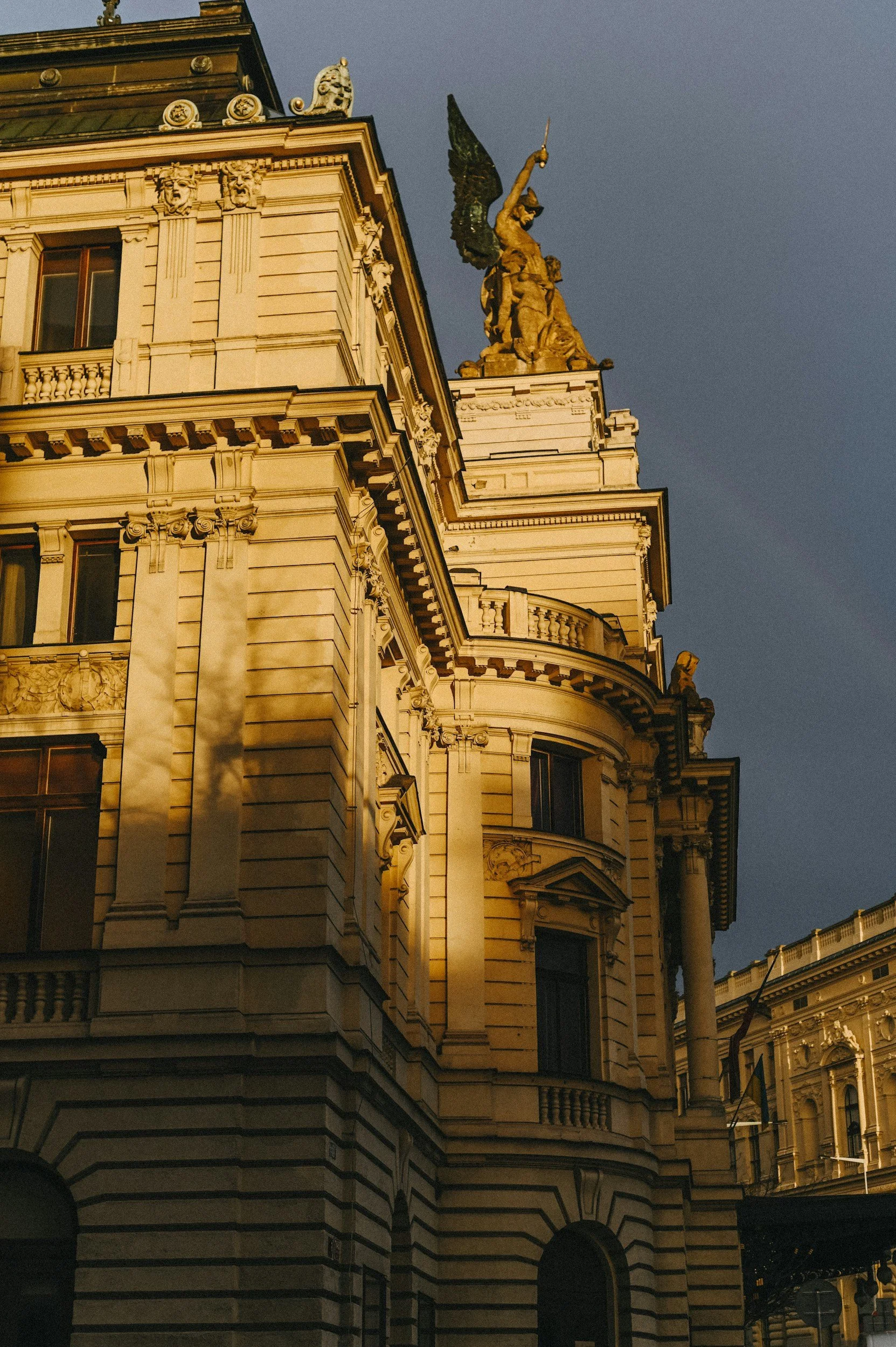
The Adventure
by Stuart Durber
Now is not the time.
The sky is thick cement
But the buildings shine
like the sun is aching to be set free from breeze-block and reinforced glass.
The angels in the architecture are moments away from singing
An overture to crack the concrete heavens.
Their wings almost twitching as they noiselessly clear their marbled throats.
But not now…
Not yet…
Now is not the time.
Now, the world is silent.
It is more patient than I.
Have you ever heard silence echo?
The shutters not yet opened.
The fluorescence inside the buildings almost beginning to flicker.
The first tinglings of a hum.
The faintest hint of incense.
Not yet…
Not yet…
Every movement is considered.
Every sound has meaning.
Forecasts and prophesies
Carried fresh on gale-force winds.
North Utsire, South Utsire
Isaiah, Zechariah
Lundy, Fastnet, German Bite
Malachi and Micah
Not yet…
Not yet…
Not yet…
A voice calling in the distance.
A young couple seeking shelter from the weather in the doorway of a nearby pub.
The world’s wheel spins on its axis
And light starts to break through.
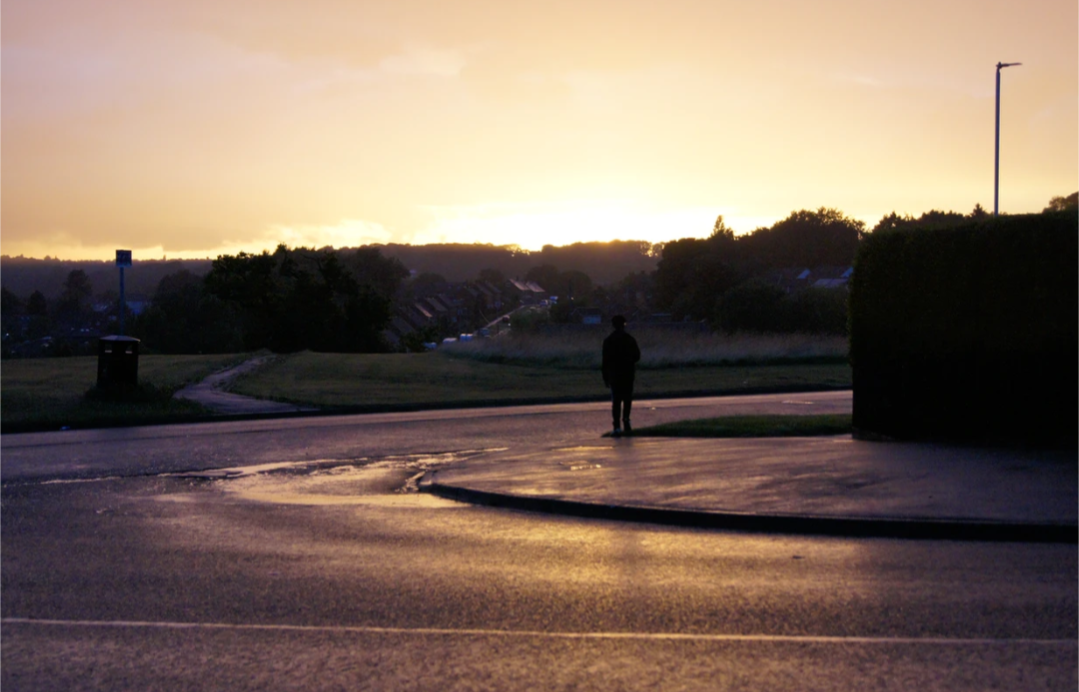
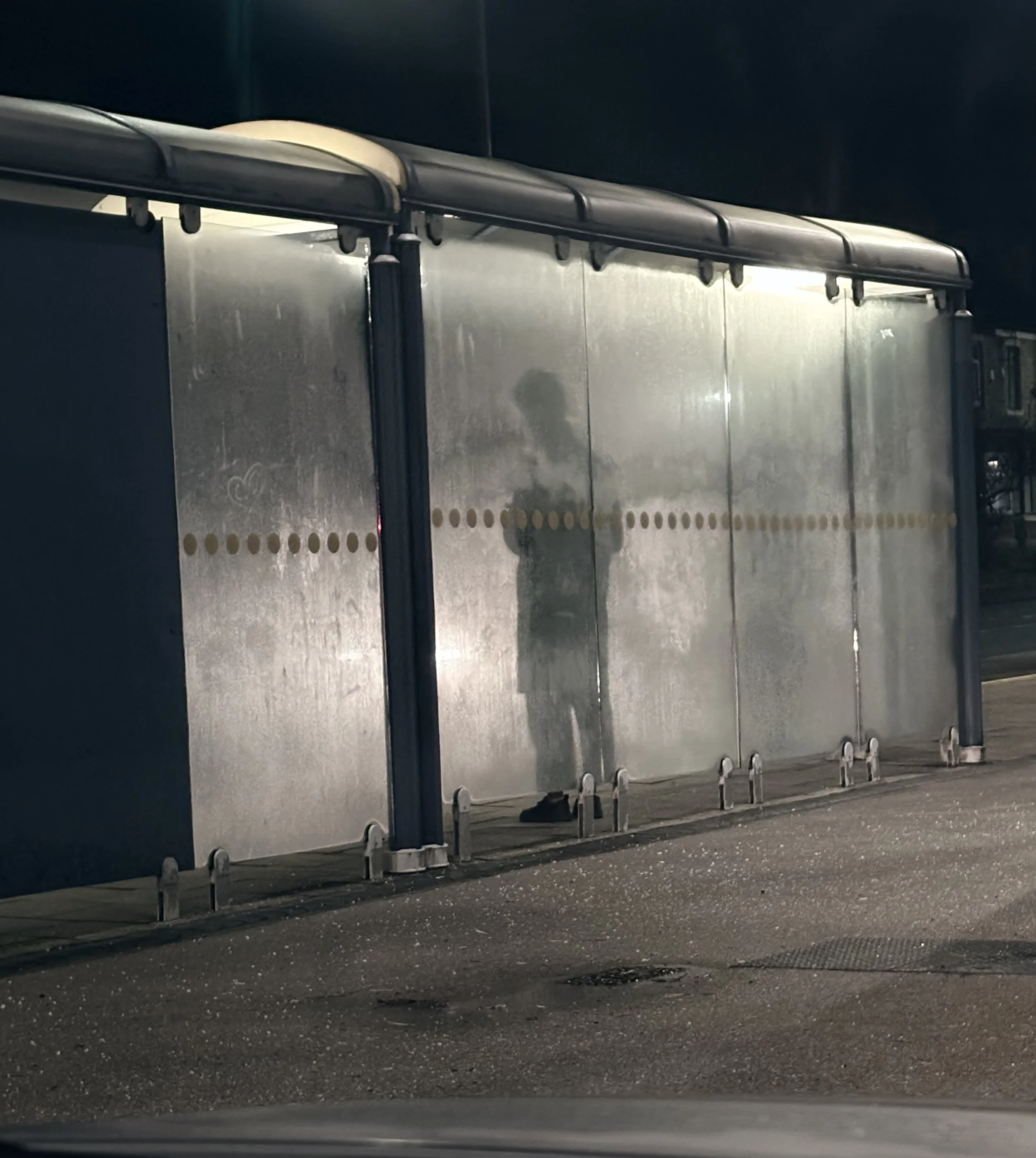
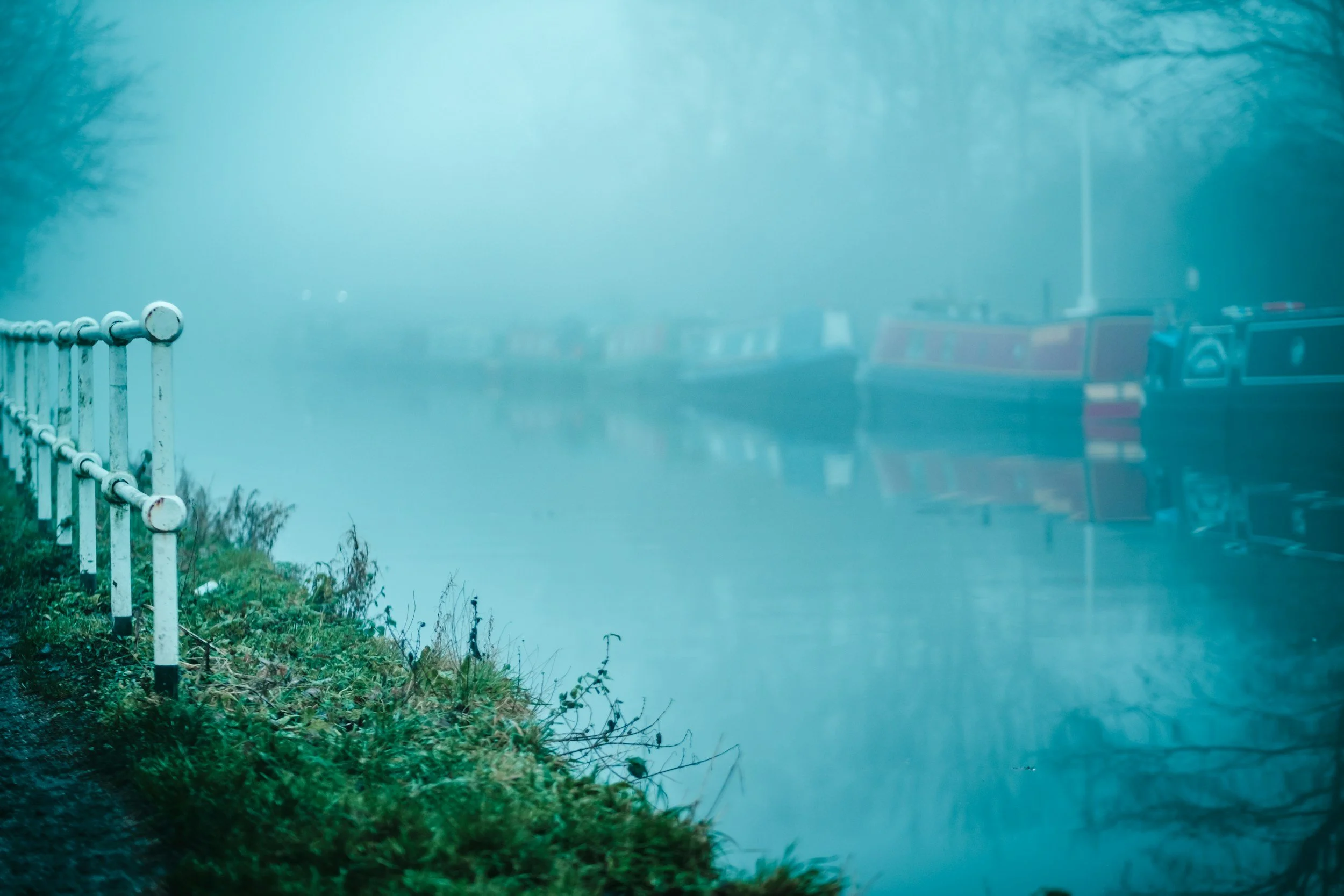
Waiting
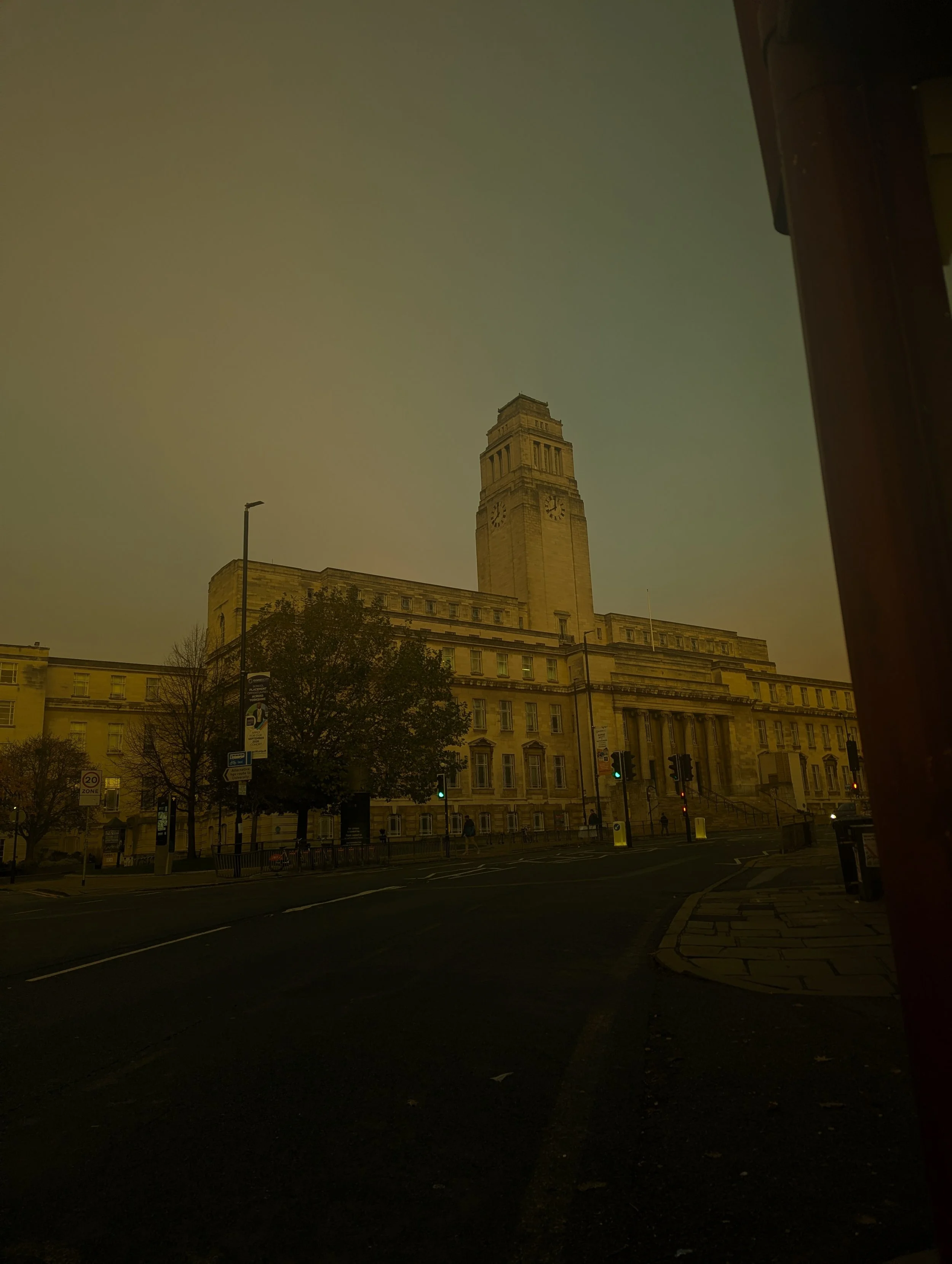
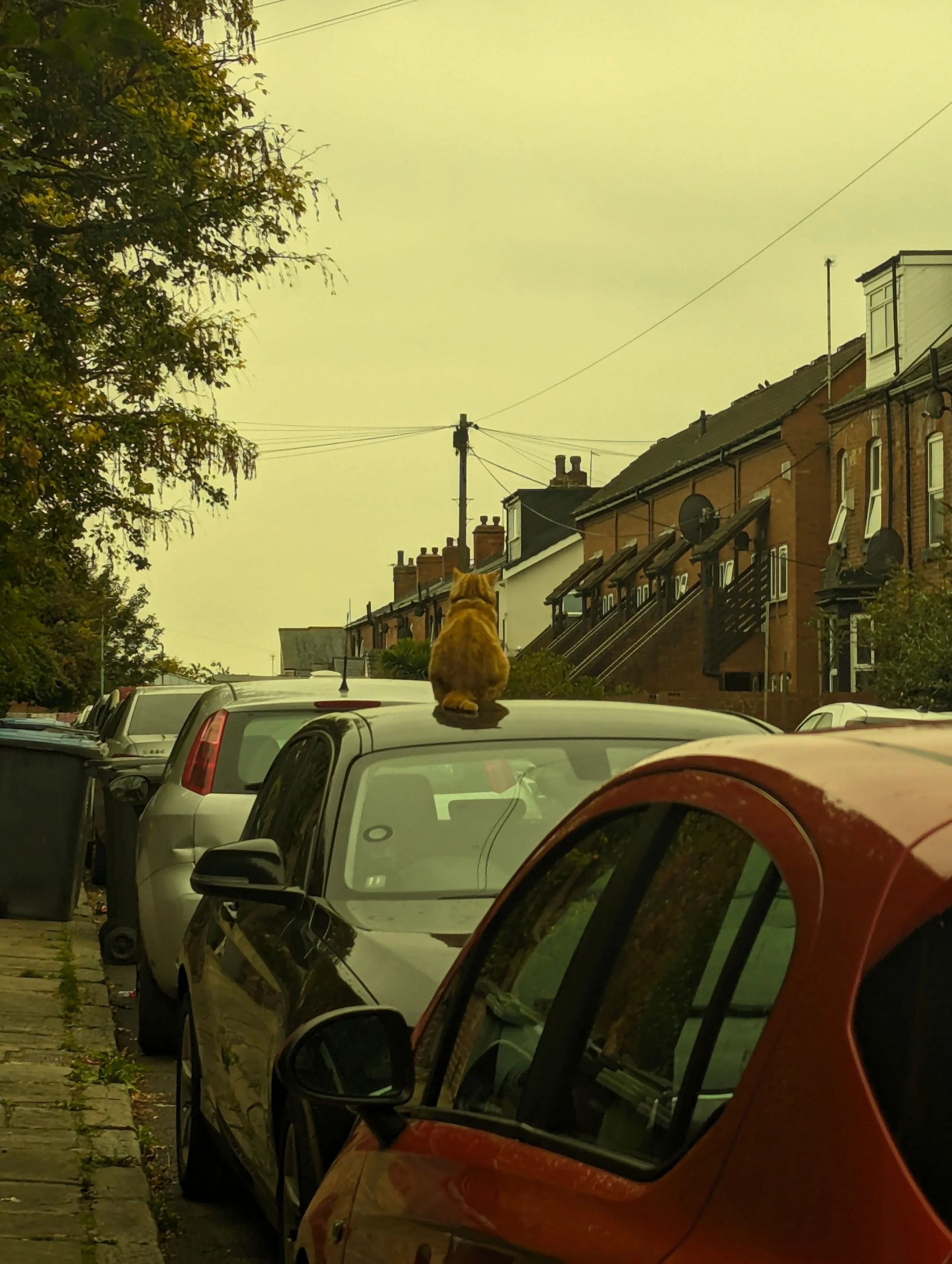
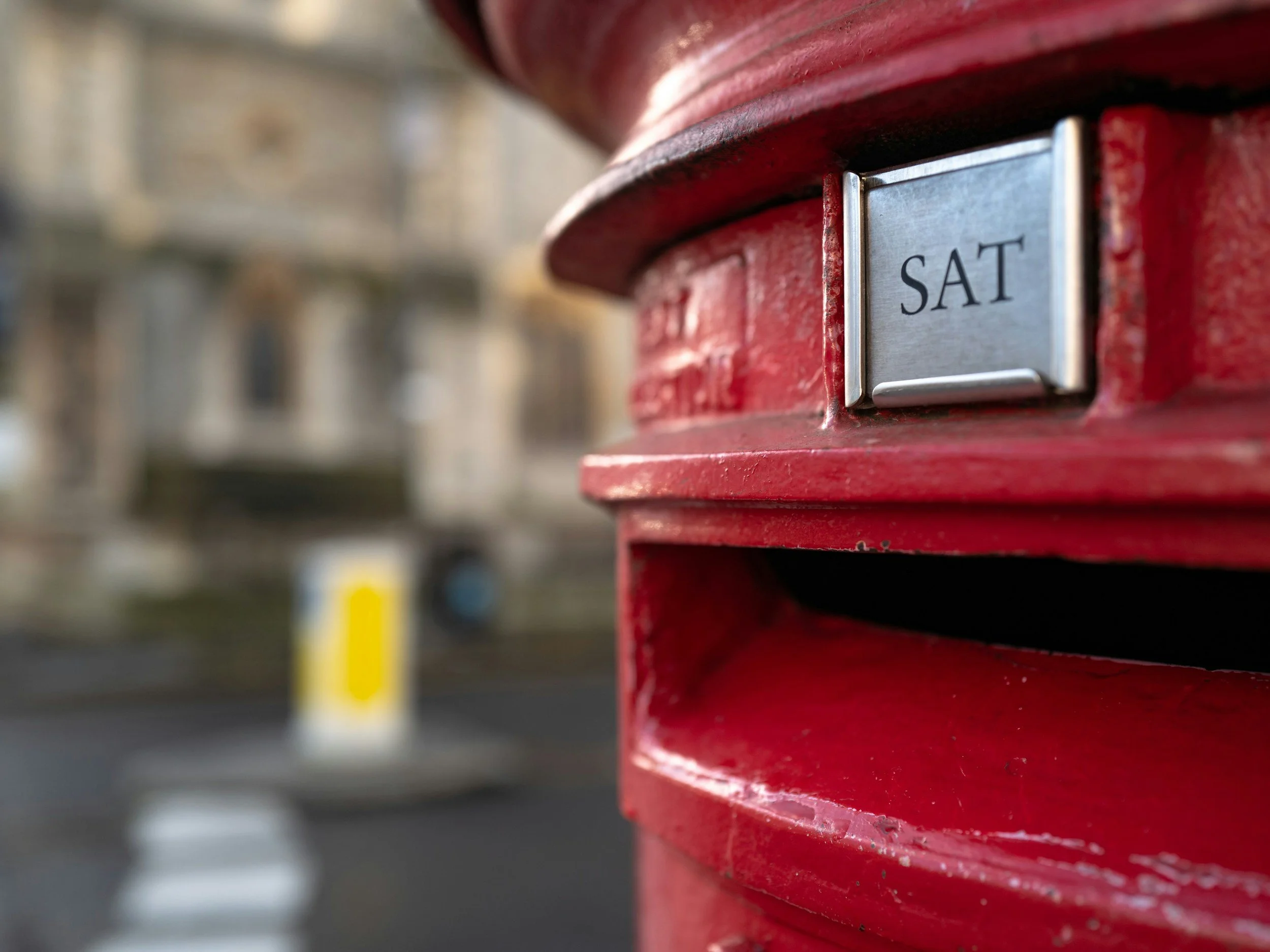
by Finny McGann
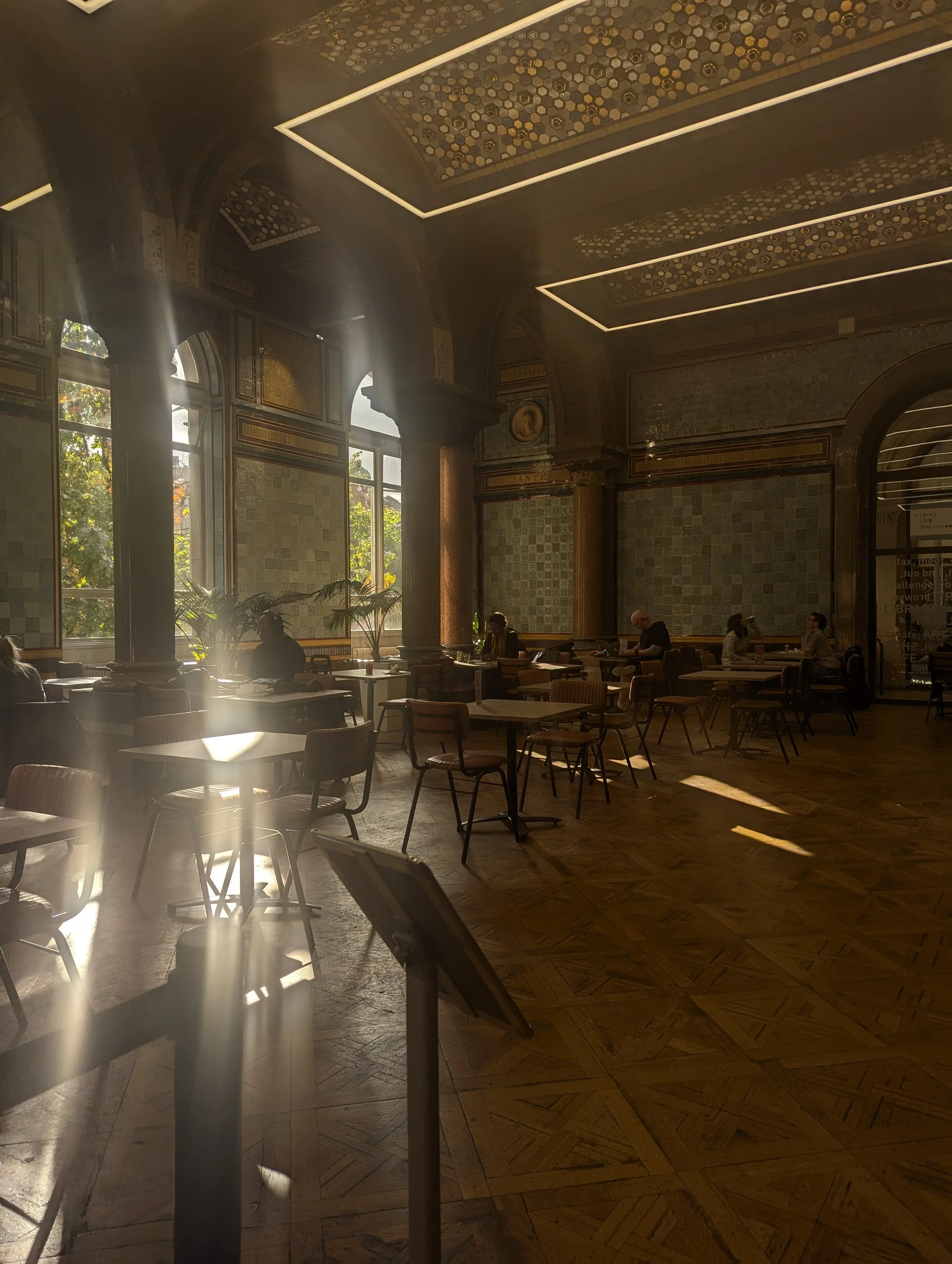
We Live At No. 4
by Annie Acre
But the postman didn’t seem to understand that – we had parcels next door, opposite, in bins, up trees. In our perfectly receptive porch? Nothing, nada, nowt, nought. To be fair, there was no door number when we moved in – just a pewter plaque reading “Chassen Square”, which seemed an odd name for a house.
I bumped into the previous owner at The Barking Dog and she said she’d never had any problems with parcels. It’s funny – when I saw her at the viewings, she was always jut-bone skinny, joints like vertices, but she’d put on half a stone which suited her and even her demeanour seemed somehow rounder. House moves can be stressful, I reasoned.
There was nothing for it – I bought a number 4 in tasteful white cursive font. It looked like a seagull tangled in the wind against our fresh sea green door paint. But, when I nipped in to grab my phone to take a photo, the 4 was lying there on the doormat. Then, when I put it back up and looked through the camera screen at the end of the garden, there was no number to be seen.
Over the next few weeks, I bought a range of 4s, increasingly large and tacky but they went the same way as the parcels, only stranger – in bins, up trees, in the granola box, in the toilet bowl. Reluctantly, I decided to get one of those etched frosted glass panels that are all the rage – true to the fashion, I now had a giant number 4 shouting above the door like a title.
Of course, by morning it had turned into Irish lettering: “Seamair Mhuire” which, according to Google, said “ironing a four-leaf clover”, meaning a funny or unusual activity. Sadly, the postman didn’t speak Gaelic. The Irish saying did change things, though.
The house – I can only describe it this way – became boxier, the lovely high ceilings lowered to make the rooms squat. The arch separating the kitchen and living room shrank to a square space you had to crawl through. Even the furniture developed sharp edges – we kept cutting our legs on our corner sofa which extended two additional sides.
And then our bodies. When I caught myself in the bathroom cabinet one morning brushing my teeth, I saw my head was now a hexahedron. My hips became square brackets, my breasts like a cube of jelly on top of a fez.
The changes weren’t just external. I felt my own self become four-sided. It felt like…. flying a kite through a quadrangle over a quadrumvirate of dons playing a game of rubix scrabble chess cards while being serenaded by a barbershop quartet. A very English square. I now knew to my bones that an Englishman’s home is his square, our weather internalised. I was inhabiting the soul of the number 4!
I had to speak to the postman urgently. I waited all day at the garden gate in the drizzling rain, preparing a speech to show I understood his predicament: “it’s a hollow job these days what with all the targets and the tracking and the privatisation sucking the lifeblood even out of the royal red vans.…”
I didn’t get to say any of it because, as soon as he clocked me, looking up from his satchel and deep into my quadrilateral eyes, recognition dawned his face.
“Oh, you live at number four”, he said, then paused thoughtfully, flicking through a bundle of letters and squinting. “I have a few no. 4s on my round. Look, if it’s not too much trouble, could you learn to become the colour sea green?”
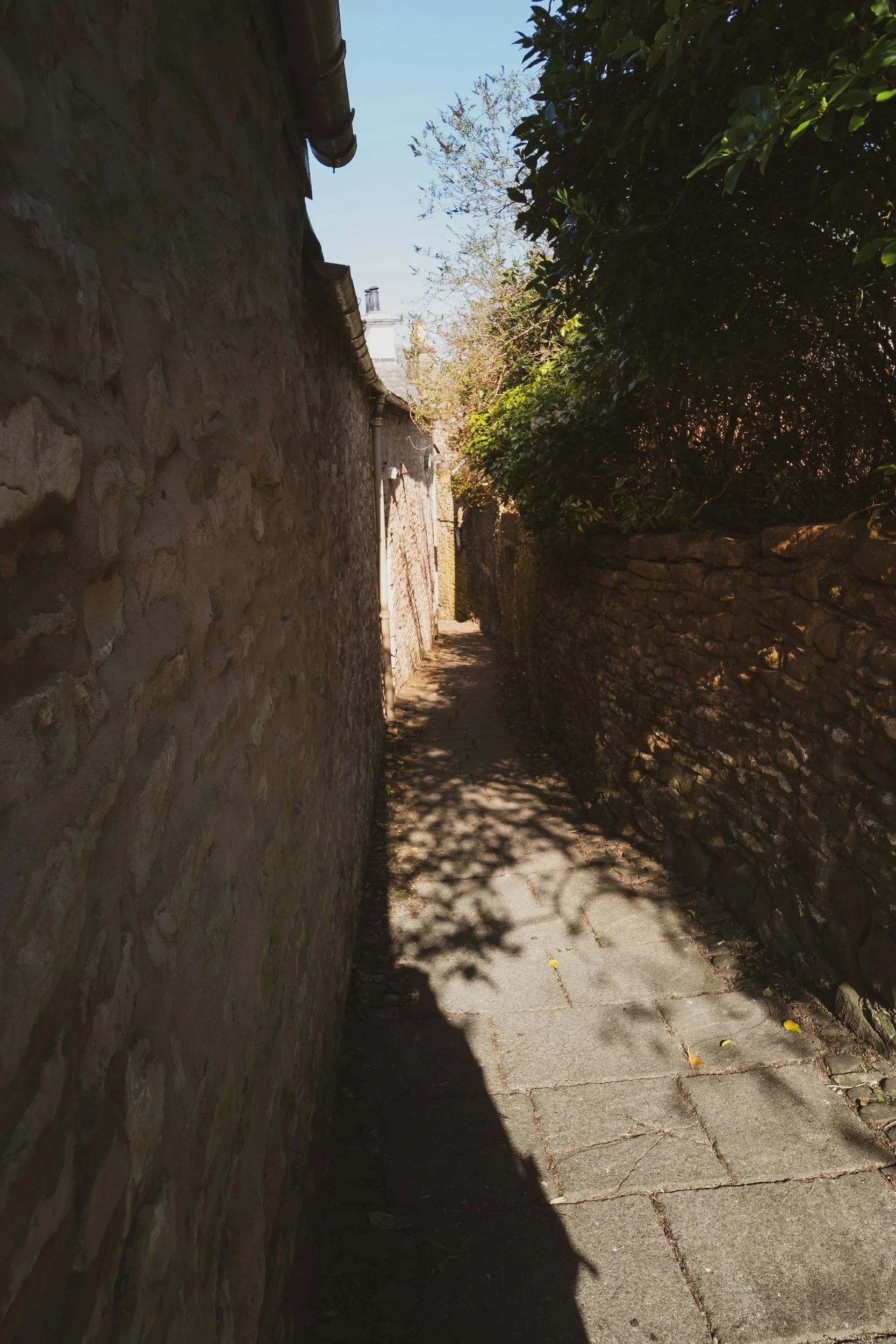
Up Woodhouse Ridge &
Down the Grosvenor Ginnels
by Keith Fenton
I step into the skunk-smoke by the horses at Meanwood
Beck, earthstars sprout the yellows of old newspapers
and nicotine, mosses amass in the cracks
of stonewalls, the lichens on the capstones
of the packhorse bridge glisten wet like green otters,
foragers flit through the foxgloves, wheedle goosegrass
and hawthorn, and I rise, with a gentle plunder of ramson,
as roe deer roam aslant on blue carpets below, till I'm
looking over the canopy of Batty's Wood, the king
of a castle of ash, oak and maple, my mirage of majesty,
where I affect to forget that we remain the people
as pondweed, placated by scraps. I locate the gap
in the high stone wall, the portal to rows
of blue-plaqued villas, piebald with warm spring
haze, Cumberland Road rises to a final crest
and I stand in my clinging shirt, take in grateful
lungfuls, but I still crave shade. Another gap
in the sandstone and I'm channeled through
a funnel of cool wafts, unseen, unheard
between lofty walls, along country tracks
that go back to when all around was ours,
now our masters curate our paths and keep us
sheltered, afford us relief, so when I breeze
out the ginnels at Woodhouse Cliff, I reach
for a damp forelock to tug in tribute.
At Woodhouse Moor, chimera of Commons,
I stride out, across boulevards of beech, breach
a corner of gloom to rest my bones, take
buttered bread from my pouch, lumps of cheese.
And garlic leaves. The wild, wild garlic leaves.
Artist Bios:
Pip McGough
Pip McGough is a UK-based poet and writer whose output explores the uncanny intersections of myth, memory, and the modern world. He blends lyricism and political commentary with dark humour, often drawing on folklore, religion, and metaphysics. His writing spans poetry, journalism, creative fiction, and surreal short forms, frequently invoking landscapes as witnesses and the human body as metaphor. He is also a nominee for the 2026 Pushcart Prize.
Matt Gilbert
Matt Gilbert is from Bristol, but currently gets his fill of urban hills in South East London. His work has appeared in various publications, including: Ink Sweat & Tears, Southword, Stand and Wild Court. His debut collection ‘Street Sailing’ came out with Black Bough Poetry in 2023.
Daniel Sayer
Daniel Sayer is an artist, filmmaker and writer based in Bramley, Leeds. Initially a musician in the 1990s in the stoner rock band moid. In his works, his personal memories and life events give a special focus to the cultural and political landscape of the 2000s. He is the author of the films Madrigal (2003), Hit the North (2018) and Alba (2022). And the forthcoming woodcut print series “A Novel without Words”. http://daniel.sayer.tilda.ws/
Dawn Kirby
Dawn Kirby has been writing for many years, though she has only recently begun sharing her work publicly. Her poetry is gaining recognition, with pieces featured in local anthologies and online publications. Born and based in Sheffield, she draws deep inspiration from the city and, the rural locality where she lives, and including the vibrant community of poets she is privileged to work alongside.
About “City of Ghosts”: The poem explores Sheffield’s youth culture during the post-punk 1970s—a time when “we could feel something brewing in the air, and responded by buying guitars and forming bands.” It captures a moment when Sheffield came alive again: the beginning of an electric dream.
Tony Potts
Tony Potts is a poet from Prestwich who writes about trauma and recovery, as well as the myths and legends that haunt Manchester still to this day. Once the host of his own spoken word open mic night Talking Wallop, his latest project POP UP POETS, Meet The Voices After Dark, looks to bring you interviews with hosts and poets alike, bringing you the under-appreciated poetry scene to your screen.
Tom Priestley
Tom Priestley was born in Leeds in 1988. Tom began writing poetry and fiction from the age of 19. Inspired by Hunter S. Thompson, Charles Bukowksi, Jack Kerouac and John Cooper Clarke. At the behest of a friend began performing his poetry at open mic nights around Leeds. From there he has supported many bands on the Leeds music scene, self-published nearly 13 collections of poetry, organised events around Yorkshire, hosts his own poetry hour Urban Gristle with an online radio podcast through Cloth Cat Broadcasts, has released 2 albums, “Levels of Insanity” and “Shades of Chaos”, with Martin Trippett, and been the drummer for the best band in Leeds, The Beer Snobs.
Matt Tyler
Matt has spent most of his working life in Manchester and loves it like a second home.
Kev the Poet
Kev The Poet was born in Liverpool, but is now resident in Mid-Devon. He began writing poetry in 1991, after finally getting it and a response to unrequited love. He began again in 2022, as a response to the preventable rise of fascism. His work has been published in the American poetry magazine Shine, he has been broadcast on BBC Devon and also contributes a weekly poem to Shaun Keavney’s show on Community Garden Radio. He gigs across the country - You can find him on Insta @thekevthepoet.
Leanne Moden
Leanne Moden is a poet, performer and educator, based in Nottingham. She’s performed across the UK and Europe, including gigs at WOMAD Festival, Shambala, and Bestival on the Isle of Wight. She was a semi-finalist at the BBC Edinburgh Fringe Slam in 2018, and her second pamphlet of poetry, “Get Over Yourself,’ was published with Burning Eye Books in 2020. She is currently working on her first full-length play, and a new collection of poetry, due out in 2027.
Paul Robb
Paul Robb writes and performs poetry telling stories of his life, thoughts and feelings. He is based in Bury near Manchester but originally hails from Little Rock Arkansas in the USA although he does lack the deep south accent.
About “Heaven”: This poem is about various memories I have of my friend Alan who passed away suddenly in 2019. It started out as a piece about what he meant to me but I didn't really like what I was writing, it didn't match the kind of person he was. I went in the direction you now see as it is more of a match to his tastes and personality.
Stuart Durber
Stuart Durber is a poet and preacher based in Trafford, Manchester. His interests and topics normally revolve around faith, politics and swearing (though there is normally less of the latter in his sermons). Further work can be found at: https://sermonsandgubbins.blogspot.com/
Finny McGann
Finny, they/them, is a Leeds/York based photographer who started taking photos in 2022. They mainly photograph people and places that show community and inclusion.
Annie Acre
Annie Acre, the editor of Urban Scrawl, is a surveyor/poet & strange storyteller whose work has appeared in Ink Sweat & Tears and Worktown Words as well as various spoken word events around Manchester. She hopes you like what she’s doing with the place x anniesacre.co.uk @sylviasdrum
Keith Fenton
Keith Fenton is a Leeds-based performance poet, event host, broadcaster and one half of the Poets Talking Bollocks podcast. Chiefly writing about borders, migration, trespass, mental health and structural inequality, he can often be found on a road somewhere between events across the North.